

Florida car accident with no traffic ticket: can you still prove fault?
Yes. An officer's decision not to issue a citation does not settle negligence. Fault depends on what the drivers did, what the evidence shows, and whether that conduct caused the crash.
The Nunez Law Firm · Legal sources checked October 22, 2026
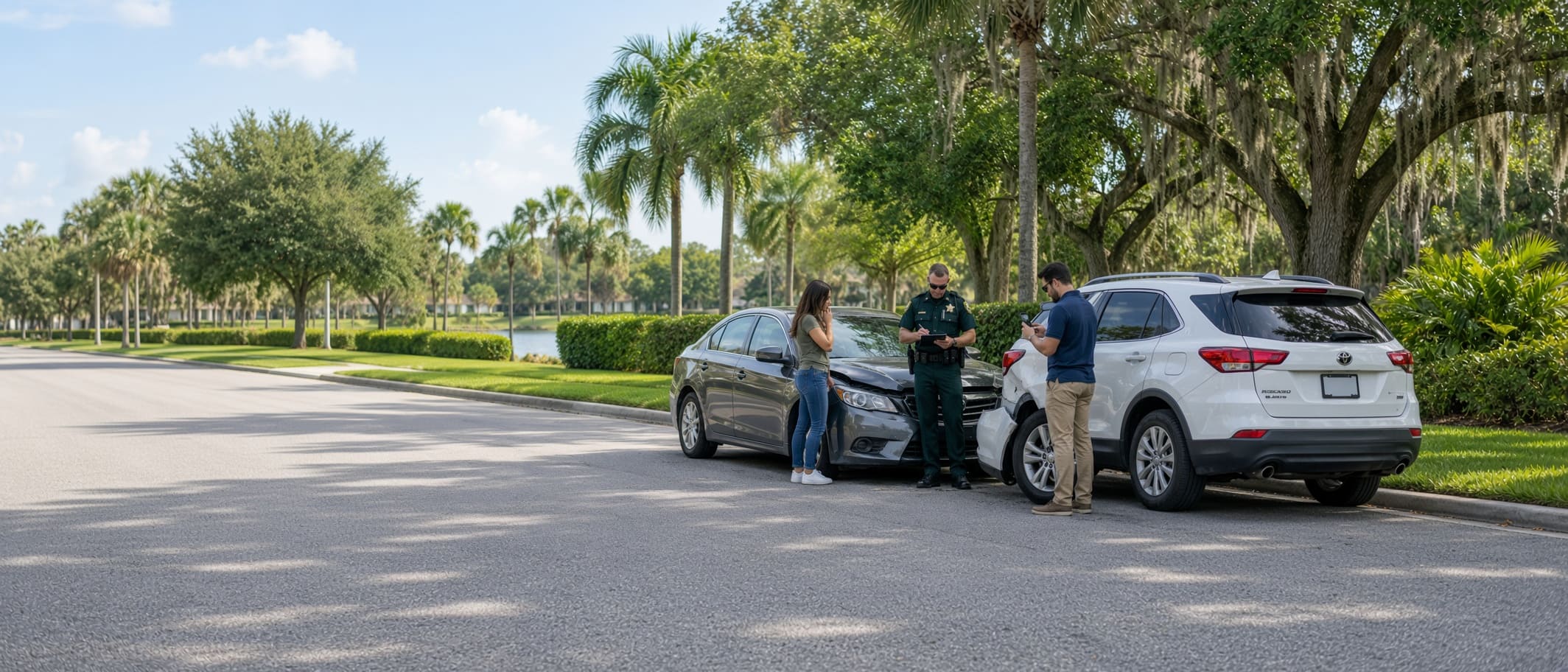
What does it mean when police issue no ticket after a crash?
It means no citation was issued at that time. It does not establish that both drivers acted carefully, that neither violated a traffic rule, or that the resulting damage has no legally responsible cause.
The officer may not have enough evidence of an infraction
The drivers may give conflicting accounts of a signal, a lane change, or right of way. Without a reliable basis for a particular violation, the officer may leave the citation decision unresolved even though the collision requires further review.
The officer may be documenting the collision, not deciding a civil claim
An investigation can produce a crash report without producing a ticket. Reporting the location, parties, damage, and witnesses is a different task from determining whether a traffic citation should be issued.
Additional evidence may exist outside the initial investigation
A nearby camera, repair inspection, independent witness, or vehicle record may clarify the sequence later. The fact that it was unavailable at the scene does not make it irrelevant to an insurance or civil liability review.
Important distinction
The absence of a citation is not proof that the officer affirmatively cleared either driver. It is also not proof that the other driver must be at fault. Both conclusions go beyond what “no ticket issued” actually says.
Three decisions that should not be confused
Was a violation cited?
Police decide whether to issue a traffic citation under the applicable enforcement rules. The answer may be no even when a collision occurred.
Did someone drive negligently?
The central questions are what reasonable care required, what each driver did, and whether a failure of care caused the claimed harm.
What claim or benefits apply?
A third-party liability claim, collision coverage, and Personal Injury Protection can involve different requirements. None is resolved merely by the ticket box.
For example, an insurer may find a driver responsible for an unsafe turn using clear video even when no officer issued a ticket. Conversely, a ticket would not by itself prove injury causation, the amount of damage, or the availability of insurance coverage.
What evidence can prove fault without a citation?
Good evidence answers a concrete dispute: who entered the lane, which light was showing, where impact occurred, or whether a driver had time to react. The value of each item depends on what it actually establishes.
| Evidence | What it may show | What to check |
|---|---|---|
| Dashcam or nearby surveillance footage | Vehicle movements, traffic signals, right of way, and collision timing. | Whether the original recording captures the relevant angle and enough time before impact. |
| Scene photographs | Lane markings, signs, visibility, debris, final vehicle positions, and road conditions. | When the photos were taken and whether vehicles had already been moved. |
| Vehicle damage and repair records | Points and directions of contact that may support or contradict a driver's account. | Damage alone generally cannot establish a precise speed or every movement before impact. |
| Independent witness observations | A signal phase, lane position, turn, or sequence observed firsthand. | Where the witness stood, visibility, timing, and consistency of the account. |
| EDR or other vehicle data | On supported vehicles, limited pre-crash speed, braking, or other event information. | Whether data exists, lawful access, preservation, and correct technical interpretation. |
| Crash report and investigation leads | Identities, locations, recorded damage, witnesses, and potential records to request. | A report is not a substitute for independent proof, and some report-related statements are restricted at trial. |
For deeper guidance on specific records, see our Florida accident photo evidence guide, video preservation guide, and explanation of vehicle EDR evidence. Each addresses a different kind of proof; none requires a citation to exist.
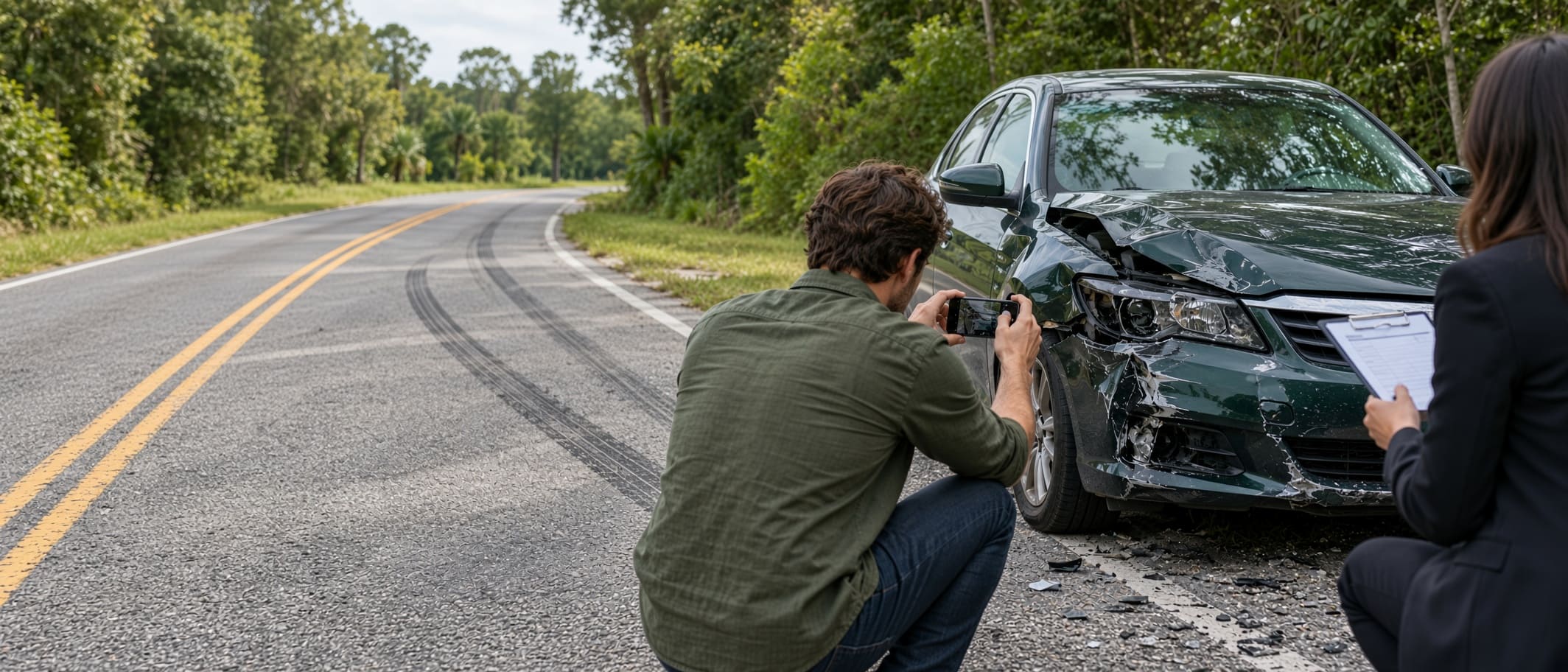
How an insurer reviews a claim when nobody was ticketed
A liability adjuster does not have to wait for a traffic prosecution or accept the absence of a ticket as a final decision. The adjuster can investigate how the accident happened, though the company's conclusion may still be disputed.
Identify each version
Review the drivers' accounts, the collision location, the report, and the traffic controls involved.
Compare objective records
Check video, photos, vehicle damage, physical evidence, and witness information.
Analyze causation and fault
Consider whether either driver failed to use reasonable care and whether that failure contributed to the loss.
Apply coverage and respond
Decide the insurer's liability position and any applicable policy issues, explaining disputed facts when challenged.
Two drivers disagree about an intersection signal
After a left-turn collision, both drivers say their signal allowed them to proceed. Police issue no ticket because the accounts conflict and the signal phase cannot be verified at the scene. A store camera later shows the vehicles and the traffic signal before impact. That footage may change the insurer's analysis even though no citation was issued.
What remains open: Video must actually show the relevant movement and signal. If the camera does not capture those facts, an adjuster should not treat the recording—or the absence of a ticket—as a complete answer.
What if the insurer says “no ticket, no fault”?
Ask the adjuster to identify the actual basis for the decision. A statement that “the officer cited nobody” is not the same as an explanation of which driver had the right of way, what happened before impact, or which facts the company found unreliable.
Request the precise reason for the liability decision
Find out whether the issue is a disputed traffic signal, lack of independent evidence, conflicting driver accounts, comparative fault, or a coverage exclusion. Keep the written response and claim number.
Correct the factual issue with specific records
Match each disputed point to an exhibit: the original photograph, timestamped video, witness contact, vehicle-inspection finding, or roadway information. Explain what each item supports without overstating it.
Separate a report error from an insurer's interpretation
If objective information in the crash report is wrong, ask the investigating agency about its correction or supplement process. An officer may not revise a disputed opinion simply because a claimant disagrees with it.
Request reconsideration, while protecting deadlines
Send a concise written explanation with organized exhibits and ask for a new liability review. If the position remains disputed, legal review may help evaluate the evidence, insurance options, and filing deadlines.
Suggested wording for a liability response
“Please identify the evidence supporting your liability decision. The absence of a traffic citation does not resolve whether either driver was negligent. I am providing the attached records for reconsideration of the specific disputed facts.”
Florida legal rules that matter in a no-ticket crash
These rules answer separate questions about traffic tickets, reports, fault allocation, and deadlines. The applicable law can depend on the date and facts of the collision.
A citation is not a civil verdict
The statute generally makes traffic citations themselves inadmissible at trial, subject to limited exceptions. Florida appellate decisions also warn that telling jurors whether police issued a ticket can unfairly influence fault questions. Independent admissible facts are what matter.
Some crash-report statements are protected
Statements made by involved people for the purpose of a required crash report, and the reports covered by the provision, have specified evidentiary protections. This does not automatically exclude an officer's independent observations or other lawfully obtained evidence.
Shared fault can affect recovery
In negligence actions covered by this section, an injured person's share of fault reduces damages. Under subsection (6), a party found more than 50% at fault for their own harm cannot recover damages. Specific exceptions and applicability rules matter.
Benefits and filing time are separate
Qualifying PIP medical benefits generally depend on receiving initial care within 14 days, not on a traffic citation. Florida generally provides two years to file an ordinary negligence lawsuit for a cause of action that accrued after March 24, 2023. Earlier accrual dates and different claims may involve other deadlines.
The practical consequence is straightforward: a missing ticket does not settle civil negligence, and a report is not the entire evidence file. When fault is contested, the underlying conduct and reliable proof should be evaluated separately from police enforcement decisions.
A short evidence checklist for a crash with no citation
The most useful next step is to keep an organized record while the facts are still verifiable. Safety and medical care come before documentation.
If you want to organize the broader insurance file after collecting these items, use the firm's Florida car accident claim checker. This article focuses specifically on the no-citation fault question rather than the full post-crash process.
Florida car accident with no traffic ticket: FAQ
Can I file an insurance claim if neither driver received a ticket?
Yes. A traffic citation is not a general requirement for opening a car insurance claim. Whether a third-party insurer pays depends on liability, damages, coverage, and proof. Your own PIP or collision coverage may follow different policy and statutory rules.
Does no citation mean the police found both drivers not at fault?
No. It means that no traffic citation was issued. The officer may have been unable to establish a particular infraction from the information then available. Do not turn that decision into a finding that both drivers were free of negligence.
Can an insurance company deny liability when police issued no ticket?
An insurer may dispute liability based on its investigation. But the absence of a ticket by itself does not prove the other driver acted reasonably. Ask what facts the insurer relied on and respond with evidence addressing those facts.
Can a Florida crash report exist even if no one received a ticket?
Yes. Crash-reporting and traffic-citation decisions are separate. Depending on the collision and applicable reporting rules, an officer may prepare a report without citing either driver.
Can the absence of a traffic ticket be used to prove innocence in court?
Not simply as proof of non-negligence. Section 316.650(9) restricts admission of traffic citations, and Florida case law cautions that references to whether a citation was issued can prejudice a jury. A court determines admissibility under the applicable law and facts.
What if the other driver says the lack of a ticket proves I caused the crash?
That conclusion does not follow. Compare both accounts with the actual traffic controls, video, vehicle damage, witnesses, and other reliable evidence. The absence of a ticket is neutral on its own.
Does Florida's “no-fault” insurance system eliminate the need to prove liability?
No. PIP may provide specified benefits without first proving that another driver caused the crash. A separate third-party bodily injury or property damage claim can still depend on negligence, damages, and available coverage.