

Florida vehicle data evidence guide
Florida Car Accident Black Box (EDR) Evidence: What It Can Show
An event data recorder may capture seconds of vehicle data around a crash, including speed, braking, accelerator input, restraint status, and change in velocity. The exact data depends on the vehicle, the event, and the recording system, so an EDR download must be interpreted in context.
Quick answer
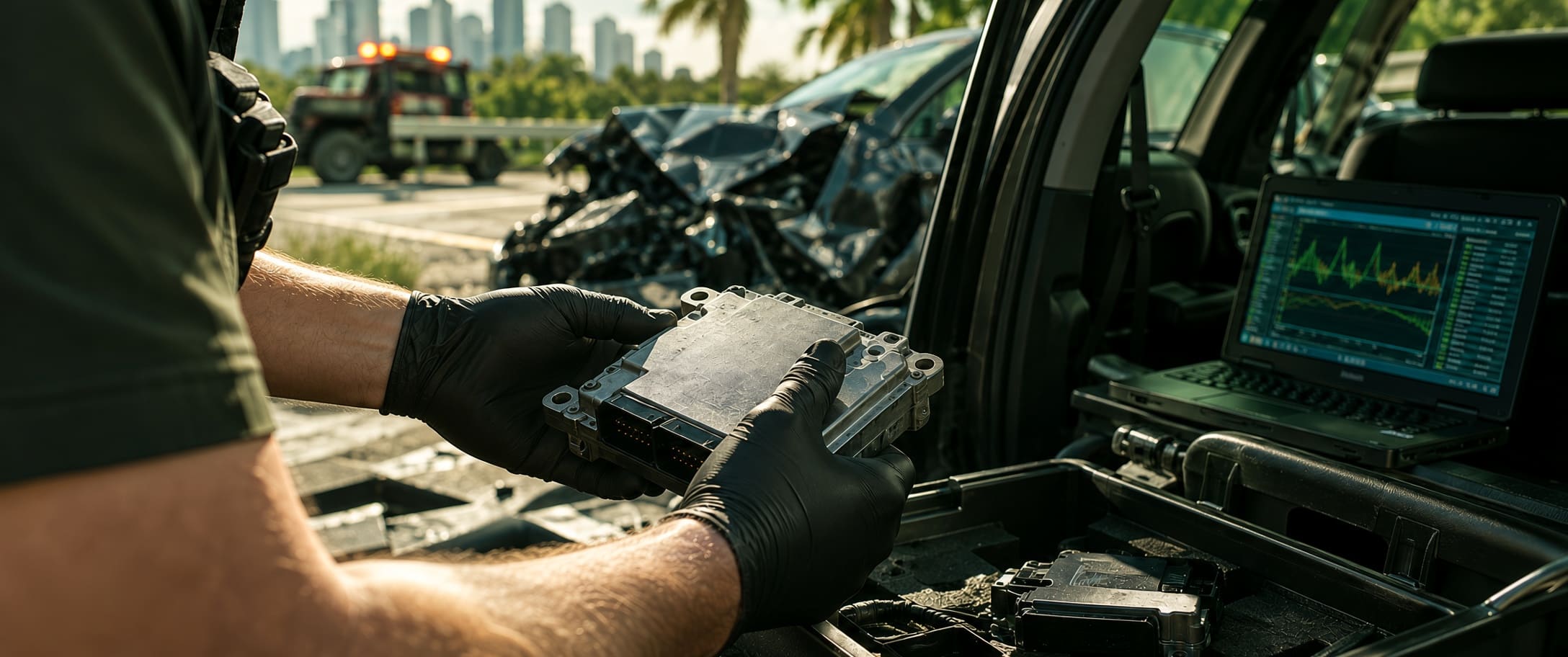
A vehicle's EDR can sometimes provide objective technical data from the seconds before and during a collision. Depending on the vehicle, it may show indicated speed, service-brake status, accelerator or throttle input, delta-V, driver-belt status, airbag information, and other parameters. It does not automatically prove fault, and it should be preserved before a totaled vehicle is transferred, dismantled, repaired, or otherwise becomes harder to inspect.
What a vehicle event data recorder is
An EDR is often called a vehicle “black box,” but it is not the same as an aircraft flight recorder. It is a crash-related recording function that stores selected technical information for a short period around a qualifying crash or near-crash event.
It records event-related vehicle data
NHTSA describes an EDR as a device that records technical vehicle and occupant information for a brief period around a crash. Depending on the vehicle and event, the record may include speed, braking, throttle position, change in velocity, restraint status, and other vehicle-dynamics or crash-severity data.
It is not a continuous video recorder
An EDR is not a dashcam and does not preserve a continuous trip history. Under Part 563, data may be buffered temporarily and stored in non-volatile memory when an event meets the applicable conditions. The EDR itself does not record audio, video, a driver's name, or the crash location.
Not every vehicle has the same system
Part 563 applies to specified light vehicles manufactured on or after September 1, 2012 when they are equipped with an EDR. Older vehicles may also have EDRs. The rule standardizes certain data and retrieval requirements, but the available dataset still varies by manufacturer, model, system, and event.
The owner's manual can be a useful first check
For vehicles covered by Part 563, the owner's manual must include an EDR disclosure. Checking that disclosure can help confirm that the vehicle has an EDR and explain the manufacturer's description of the system. It is a useful first step before determining what data may be retrievable from that specific vehicle.
Important distinction
The phrase “black box” is shorthand. The actual evidence depends on the vehicle's manufacturer, model, model year, module, software, crash trigger, and whether the event was successfully stored and can still be retrieved.
What EDR data may show after a Florida crash
The most useful EDR information often falls into two groups: pre-crash inputs and crash-event measurements. The exact fields vary, and some data elements are required only when the vehicle records them or has the relevant equipment.
| Data field | What it may help show | Key limitation |
|---|---|---|
| Vehicle indicated speed | A recorded speed value in the seconds before the event can help evaluate whether a vehicle was accelerating, slowing, or traveling at a disputed speed. | This is vehicle-indicated speed, not a GPS track. The time window and sampling rate depend on the applicable rule and vehicle. |
| Service brake on/off | Whether the service brake input was recorded as active during pre-crash samples. | An on/off status does not by itself establish stopping distance, brake force, road friction, or why the driver braked. |
| Throttle or accelerator input | Whether the accelerator or throttle input changed before impact. | The meaning of a percentage must be interpreted using the vehicle's definitions and the rest of the crash data. |
| Delta-V | The vehicle's change in velocity during the crash event, which can assist with crash-severity and reconstruction analysis. | Delta-V is not the same thing as the vehicle's pre-impact road speed. |
| Driver safety-belt status | Whether the driver's belt status was recorded as buckled or unbuckled shortly before the event. | A single recorded status should be read with the module documentation and other occupant evidence. |
| Airbag and restraint information | Deployment timing or system status for certain frontal airbags and, when recorded, other restraint components. | The available fields differ by vehicle equipment and EDR implementation. |
| Other recorded parameters | Some vehicles may also record engine RPM, steering input, ABS activity, stability-control status, lateral delta-V, roll information, or additional manufacturer-specific data. | Do not assume these fields exist until the specific vehicle, module, and compatible retrieval method are confirmed. |
Current federal timing rule
Under current 49 CFR § 563.7, the −20 to 0 second pre-crash interval at 10 samples per second phases in by production: 25% of applicable EDR-equipped production beginning September 1, 2028, 50% beginning September 1, 2029, 75% beginning September 1, 2030, and full compliance for covered production beginning September 1, 2031. Until the longer interval applies, the federal minimum remains −5 to 0 seconds at 2 samples per second. Later transition dates apply to small-volume or limited-line manufacturers and to certain altered or multistage vehicles.
What EDR evidence cannot prove by itself
EDR data can be powerful because it is technical and time-based, but it is not a complete reconstruction. NHTSA's own research cautions that EDR data should be used with other data sources.
It does not automatically identify who caused the crash
An EDR can document certain inputs and vehicle responses. Liability still depends on how those data fit with lane positions, traffic controls, witness accounts, roadway evidence, vehicle damage, and the legal duties that applied.
It does not normally provide a video of the collision
The EDR is not a camera. If the dispute depends on a traffic signal, lane change, pedestrian movement, or what another vehicle did, video evidence may answer questions the EDR cannot.
It does not guarantee a complete pre-crash history
The recording window is short, the event must meet the system's capture logic, and some parameters may be unavailable. A download can also show that a file is incomplete or that a particular field was not recorded.
It requires technical interpretation
Time zero, event sequence, sampling intervals, module terminology, units, multiple-event records, and vehicle-specific limitations can change how a field should be understood. Raw numbers should not be separated from the download report and reconstruction context.
How to preserve EDR evidence after a total loss or repair
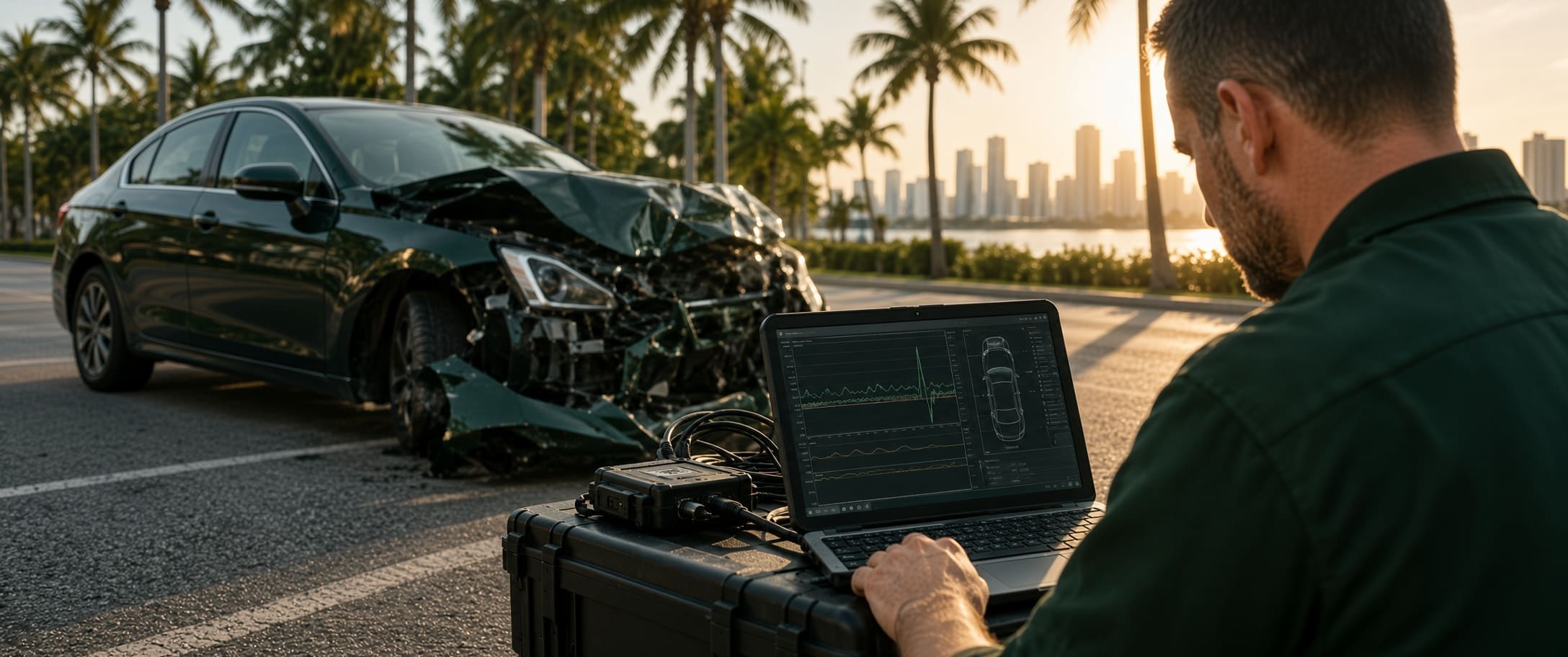
Preservation can become urgent when a damaged vehicle is at a tow yard, repair facility, insurer storage lot, or salvage facility. The practical issue is whether the vehicle and relevant module will remain available long enough for lawful access and a vehicle-specific EDR retrieval.
Identify the exact vehicle
Record the VIN, year, make, model, trim if known, current location, storage company, claim number, and the person or entity that presently controls the vehicle.
Preserve the vehicle and relevant module
If EDR evidence may matter, request that the vehicle not be destroyed, dismantled, sold for salvage, materially altered, or subjected to avoidable repair work that could interfere with inspection or access before the download issue is addressed.
Document who has possession
Total-loss vehicles can move from a tow yard to an insurer facility or auction pipeline. Track each transfer and keep written communications so the location and custody of the vehicle are clear.
Arrange a vehicle-specific EDR download
EDR retrieval requires special equipment and vehicle-specific compatibility. A qualified examiner can determine whether the vehicle and module are supported, choose the appropriate retrieval method, preserve the original file and report, and document the process.
Preserve parallel time-sensitive evidence
EDR data answers different questions than video. If traffic cameras, business surveillance, or dashcam footage may exist, preserve that material separately. See the guide on how to preserve car accident video evidence in Florida.
Not every event record has the same overwrite protection
Under 49 CFR § 563.9, deployment-event memory covered by the rule must be locked against future overwriting. Other event records are treated differently: if no empty non-volatile buffer is available, a manufacturer may allow prior non-deployment event data to be overwritten by a later event, or may choose not to record the new event. Preservation therefore involves both physical custody of the vehicle and the type of event stored.
Who owns EDR data and who can access it
Access to EDR data involves both legal authority and physical access to the vehicle or module. When useful data is in another driver's vehicle, preserving the vehicle does not by itself authorize retrieval.
Owner or lessee control
The Driver Privacy Act of 2015 states that EDR data belongs to the owner or lessee of the vehicle in which the recorder is installed.
Consent can permit retrieval
The statute allows retrieval when the owner or lessee provides written, electronic, or recorded audio consent, including for diagnostic, service, or repair purposes.
Court or administrative authority may matter
Federal law also recognizes access when a court or other qualifying judicial or administrative authority authorizes retrieval, subject to the applicable standards for evidence.
Other statutory exceptions exist
The federal law includes limited exceptions for specified safety investigations, emergency medical response, and traffic-safety research. Those exceptions are narrower than ordinary civil claim access.
Practical point in a disputed-fault claim
If the useful EDR is in the other driver's vehicle, do not assume the data can simply be downloaded because the crash occurred. Preservation and access are separate issues: the vehicle may need to be preserved while consent, legal authority, and the technical download process are addressed.
EDR data versus dashcam, GPS, and phone data
EDR, video, GPS or telematics, and phone records answer different questions. EDR data is most useful when compared with sources that provide location, visual context, or a longer timeline.
EDR
Short event-focused technical record. May show indicated speed, braking, accelerator input, delta-V, belt status, restraint data, and other supported fields. Usually does not show ordinary video, audio, or a continuous route.
Dashcam or surveillance video
Can show lane position, traffic lights, vehicle movement, visible braking behavior, road conditions, and the sequence of events. It may not provide the internal vehicle inputs or crash delta-V recorded by an EDR.
GPS or telematics
May provide location, route, timestamps, and speed-related information over a longer period, depending on the system and retention. It is separate from the EDR and may use different sensors and definitions.
Phone data
Depending on the lawful source and available records, phone data may help establish communications, app activity, location history, or timing. It usually does not replace vehicle-system data from the crash module.
How an expert may use an EDR download
A crash-reconstruction or EDR specialist can verify retrieval compatibility, document the download, interpret the event record, and compare the data with the rest of the collision evidence.
Why interpretation matters
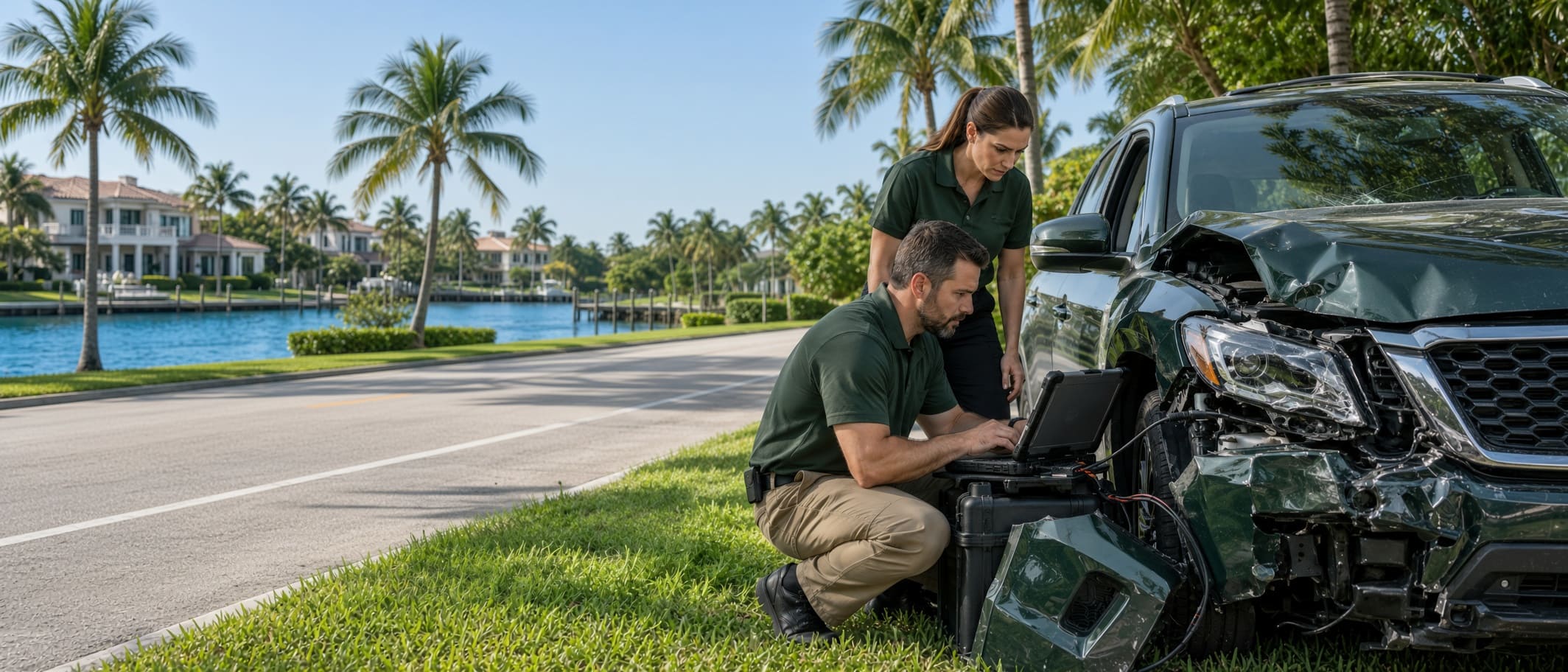
NHTSA requires manufacturers of covered EDR-equipped vehicles to make a commercially available retrieval tool available by licensing or other means. Even with the proper tool, the resulting report still needs vehicle-specific interpretation before it is used to support a liability opinion.
When EDR evidence matters in speeding or disputed-fault claims
EDR evidence is most useful when a specific technical question is disputed and the recorded vehicle data can help test competing explanations of the crash.
Disputed speeding before impact
Recorded indicated speed can help evaluate a claim that a vehicle was traveling too fast before impact. It should be compared with the speed limit, roadway evidence, video, damage, and the timing of the EDR samples. For legal information about speeding-related collisions in Orlando, see the Orlando speeding car accident lawyer page.
Disputed braking or evasive action
Brake status, accelerator input, steering data when available, ABS activity, and stability-control status may help evaluate whether the driver reacted before impact and how the vehicle systems responded.
Conflicting descriptions of the collision sequence
Multiple-event information and delta-V can sometimes help distinguish separate impacts or test whether the sequence described by a driver is consistent with the stored event record.
Cases with little independent evidence
When there is no useful video and witness accounts conflict, EDR data may become more important because it provides a technical record from the vehicle itself. It still should not be treated as a substitute for a complete investigation.
Florida car accident EDR FAQ
Does every car have a black box or EDR?
No. EDR availability and capability depend on the vehicle. Federal Part 563 applies to specified light vehicles manufactured on or after September 1, 2012 if they are equipped with an EDR. Older vehicles may also have EDRs; that date marks Part 563 applicability for covered vehicles, not the beginning of EDR technology.
Can an EDR show how fast a car was going?
Often, yes, if the vehicle is equipped with a covered EDR and the relevant event data was recorded. The field is typically vehicle-indicated speed. It is not the same as GPS speed, and the number should be interpreted with the sampling interval, event timing, and vehicle-specific report.
Can an EDR show whether the driver braked?
Many covered EDRs record service-brake status in the pre-crash window. Some vehicles may also store ABS or other brake-related information. A brake on/off field does not by itself show braking force or stopping distance.
What does delta-V mean in an EDR report?
Delta-V is the change in the vehicle's velocity during the crash event. It can help describe crash severity and dynamics, but it is not a direct substitute for the vehicle's road speed before impact.
Does an EDR record video or audio?
No. NHTSA distinguishes EDRs from devices that record audio or video. Dashcam, traffic-camera, business-surveillance, telematics, and phone evidence are separate sources and may need separate preservation requests.
Who owns the EDR data after a crash?
Under the federal Driver Privacy Act of 2015, EDR data is the property of the vehicle owner, or the lessee when the vehicle is leased. Access by others generally requires a statutory basis such as consent or qualifying legal authorization.
Can EDR data disappear after a totaled vehicle is moved?
Yes, evidence can become unavailable for more than one reason. The vehicle or module may be transferred, auctioned, dismantled, repaired, or destroyed, and some non-deployment event records may be overwritten under the conditions allowed by 49 CFR § 563.9. If the data may matter, preserve the vehicle promptly and arrange a vehicle-specific EDR retrieval before control changes.
Does EDR evidence prove speeding or fault?
Not by itself. A recorded speed value can be important in a speeding dispute, but fault requires the full crash context. EDR evidence should be compared with the roadway, traffic controls, video, physical damage, witness accounts, and other reliable records.
Vehicle data preservation
Need help preserving EDR evidence after a Florida crash?
If speed, braking, or fault is disputed and the vehicle may be repaired, totaled, or transferred, early preservation can matter. The Nunez Law Firm can review the crash facts and discuss whether vehicle data should be preserved and evaluated.
(407) 203-2769Official and primary sources
- NHTSA — Event Data Recorder Federal research overview explaining what EDRs are, the types of crash-related data they may record, and why EDR data should be used with other evidence.
- 49 CFR Part 563 — Event Data Recorders Federal regulation governing covered EDR-equipped light vehicles, including data elements, format, capture, survivability, owner-manual disclosures, and retrieval tools.
- 49 CFR § 563.7 — Data elements Primary regulatory source for required and conditionally required EDR data, including indicated speed, brake status, accelerator input, delta-V, belt status, and other fields.
- 49 CFR § 563.9 — Data capture Primary regulatory source explaining when event data is recorded, when deployment-event memory must be locked, and when prior non-deployment event data may be overwritten.
- 49 CFR § 563.11 — Information in owner's manual Required EDR disclosure language describing the short-duration crash data, special retrieval equipment, and limits of ordinary EDR recording.
- 49 U.S.C. § 30101 note — Driver Privacy Act of 2015 Primary federal source addressing ownership of EDR data and the circumstances in which someone other than the owner or lessee may access it.
- 49 CFR § 563.12 — Data retrieval tools Federal requirement concerning commercial availability of tools capable of accessing and retrieving Part 563 EDR data.