

Florida car accident evidence guide
How to prove speeding after a Florida car accident
Speeding may be shown through police measurements, EDR data, video, witnesses, roadway evidence, vehicle damage, and reconstruction. The evidence should connect speed to how the crash happened.
Quick answer
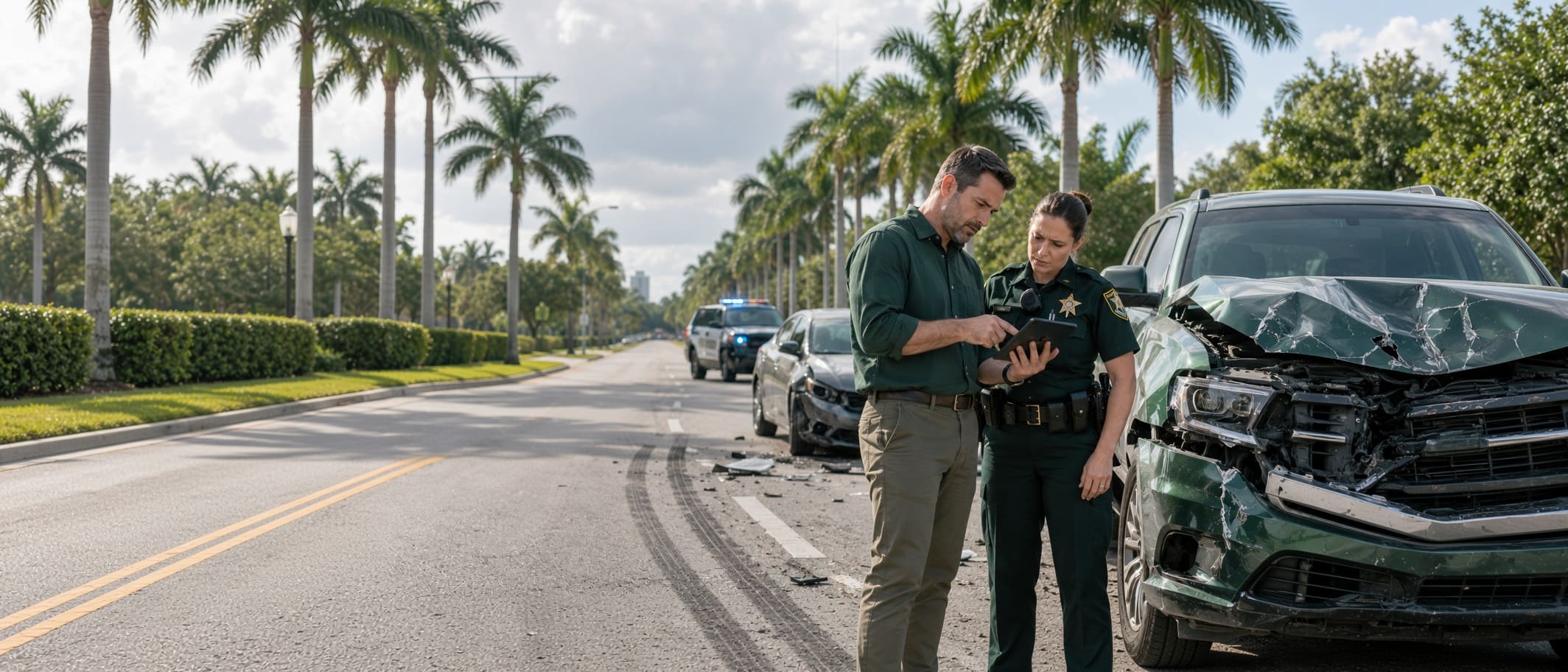
To prove speeding after a Florida car accident, look first for evidence that records or measures speed, such as a police speed measurement, usable EDR pre-crash speed data, or video that supports a reliable time-distance calculation. Witnesses, roadway evidence, vehicle damage, and crash records can then corroborate or challenge that result. One reliable source can be strong evidence, but disputed cases benefit from independent confirmation.
How speed is evaluated in a Florida crash claim
For purposes of evaluating a Florida crash claim, two common speed questions are whether a driver exceeded the applicable speed limit and whether the driver's speed was reasonable for the traffic, visibility, weather, roadway conditions, and other actual or potential hazards.
Exceeding the applicable speed limit
A posted limit creates an obvious numerical comparison. The key proof may be a reliable speed measurement, vehicle data, time-distance analysis from video, or reconstruction evidence that supports a speed above the applicable limit.
Driving too fast for conditions
Florida Statutes section 316.183 also requires a reasonable and prudent speed under existing conditions and calls for reduced speed around hazards such as intersections, curves, hill crests, pedestrians, traffic, weather, or roadway conditions.
Why the distinction matters
A case does not always turn on proving an exact miles-per-hour figure. Evidence can also show that the driver approached an intersection, curve, stopped traffic, rain, or another visible hazard without reducing speed enough to respond safely. The speed evidence still has to be connected to how the crash happened.
Evidence that may help prove excessive speed
Start by separating evidence that records or measures speed from evidence that supports an inference. A police speed measurement, usable EDR pre-crash speed data, or validated video time-distance analysis may provide a technical speed figure. Witnesses, damage, roadway evidence, and final positions usually corroborate, challenge, or help interpret that figure.
| Evidence source | What it may show | Important limitation |
|---|---|---|
| Dashcam or surveillance video | Approach speed, relative movement, braking, traffic signals, lane position, and distance traveled over a measurable time interval. | A clip does not automatically produce an accurate mph value. Camera timing, frame rate, perspective, lens distortion, and known distances may need to be verified. |
| Witness statements | Rapid approach, passing behavior, acceleration, braking, vehicle position, and what the witness saw before impact. | A description such as "very fast" is less precise than a detailed account tied to location, sequence, distance, traffic, and timing. |
| Roadway and scene evidence | Tire marks, gouges, debris, final rest positions, roadway geometry, sight distance, grade, curve, signage, and surface conditions. | No visible skid mark does not mean no braking occurred, and one mark should not be converted into speed without proper measurements and assumptions. |
| Vehicle damage and reconstruction | Crush patterns, impact geometry, movement after impact, change in velocity, and whether the physical evidence is consistent with claimed vehicle motion. | Damage severity alone does not establish a specific pre-crash speed and should not be used as a shortcut for a reconstruction analysis. |
| EDR or black-box data | Depending on the vehicle and event, pre-crash indicated speed, throttle or accelerator input, service-brake status, and separate crash-event data such as delta-V. | Data availability, access, extraction, and interpretation vary by vehicle and event. Delta-V should not be treated as pre-crash travel speed. |
| Police speed measurement records | Radar, LiDAR, or other approved speed-device measurements associated with the event when law enforcement actually measured speed. | Device testing, operator requirements, vehicle identification, and the rules governing use of the measurement still matter. |
| Crash report and citation | The officer's recorded observations, listed contributing factors, diagrams, witness leads, and whether a traffic citation was issued. | A citation or report entry should not be treated as an automatic civil-liability finding. Florida law also restricts use of certain crash reports and crash-report statements at trial. |
| Phone, GPS, fleet, or telematics data | Location points, timestamps, route history, vehicle events, or fleet-speed records when the system actually records those fields. | The data must be relevant, attributable to the vehicle or person at issue, technically reliable, and lawfully obtained. |
How video can help establish vehicle speed
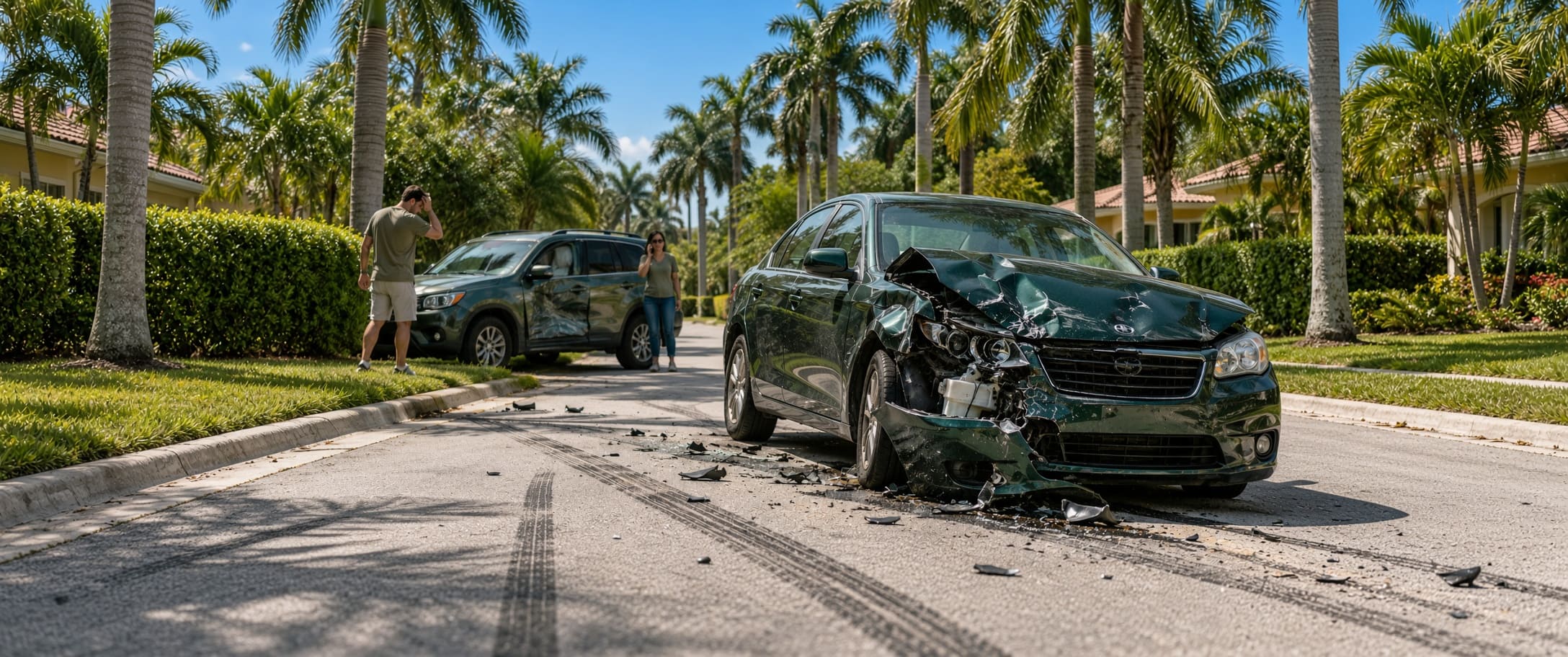
Video can preserve vehicle movement over time, but a vehicle merely looking fast is not a reliable speed measurement. A usable speed analysis depends on what the recording can verify about timing, distance, perspective, and the vehicle's movement.
Use known distances when possible
Lane markings, crosswalks, stop bars, light poles, building dimensions, driveway edges, or surveyed points may help establish real-world distance. If the time between two verified points is reliable, an analyst may be able to estimate average speed over that interval.
Check timing and frame information
Security systems can have inaccurate clocks, variable frame rates, skipped frames, compression, or exported clips that differ from the native file. Preserve the original file and metadata before making edits or screen recordings.
Look beyond the instant of impact
The approach may show acceleration, late braking, passing other traffic, closing distance, or failure to slow for a visible hazard. Those facts may matter even if the collision itself occurs outside the camera's view.
Do not confuse appearance with measurement
Camera angle and perspective can make motion look faster or slower. A visual impression may support a witness account, but a precise speed estimate should be tied to verifiable timing, distance, or other technical evidence.
For camera sources, original-file handling, retention risks, and preservation requests, see how to preserve dashcam and surveillance video after a Florida car accident.
Roadway, scene, and vehicle evidence
Physical evidence can test whether a claimed speed is consistent with the collision. It is most useful when documented before vehicles are repaired, the roadway is cleaned, weather changes, or temporary marks disappear. For a practical scene-documentation checklist, see what photos to take after a Florida car accident.
Tire and roadway marks
Skid marks, tire scuffs, ABS marks, yaw marks, gouges, fluid trails, and debris fields may help reconstruct vehicle movement. Their meaning depends on where they begin and end, the road surface, braking system, grade, and other conditions.
Final rest positions
Where the vehicles and debris came to rest can help evaluate travel paths and post-impact movement. Positions should be documented with measurements or reliable scene records, not only memory.
Road geometry and sight distance
Curves, hills, intersections, lane width, shoulders, signage, vegetation, lighting, and sight lines can affect how much time a driver had to perceive and react to a hazard.
Vehicle crush and impact geometry
Damage patterns can help identify impact direction and energy transfer. They are typically more meaningful when combined with vehicle specifications, scene measurements, EDR data, and reconstruction methods.
Damage does not equal speed by itself
A heavily damaged vehicle does not automatically prove a particular pre-crash speed, and limited visible damage does not automatically prove a low-speed collision. Vehicle design, impact angle, overlap, struck object, vehicle mass, and energy transfer all affect the result.
What EDR or black-box data may show
An event data recorder is not a continuous trip recorder. For vehicles equipped with an EDR and covered by 49 CFR Part 563, the system records specified crash-related dynamic data around a qualifying event. The available fields and the ability to retrieve them depend on the vehicle, model year, system, and crash event.
Pre-crash and crash-event fields
- Vehicle indicated speed before the event, where recorded
- Service-brake status
- Throttle or accelerator input
- Engine RPM and other recorded vehicle states where available
- Crash-event delta-V data, which must be interpreted separately from pre-crash speed
What to verify before relying on EDR data
- Was the vehicle equipped with an EDR covered by the applicable rules?
- Did the crash trigger and preserve a usable event?
- Which data elements does this vehicle actually record?
- Was the correct vehicle and event downloaded?
- Was access authorized and the extraction documented?
EDR speed is not the same as delta-V
Pre-crash indicated speed describes recorded vehicle speed before the event. Delta-V describes the vehicle's change in velocity during the crash event. A delta-V value should not be presented as the vehicle's pre-impact travel speed.
Access is a legal as well as technical issue
Federal law generally treats EDR data as the property of the vehicle owner or lessee and limits access to specified statutory exceptions. Do not assume that another vehicle's EDR data can be retrieved unless access is authorized under an applicable exception, such as owner or lessee consent or judicial or administrative authorization.
Phone, GPS, fleet, and telematics records
Digital location records can sometimes help, but they are not interchangeable. A phone may belong to a passenger, a GPS point may update only periodically, and a fleet system may calculate speed differently from a vehicle EDR.
What to verify before relying on digital location data
- What the system records: a GPS point, calculated speed, route history, fleet event, navigation record, or app activity are not the same thing.
- Who and what the record belongs to: a phone may belong to a passenger, and a phone location does not automatically establish vehicle speed.
- Metadata and source: native exports or provider records may preserve timestamps, coordinates, precision, and account identifiers that screenshots omit.
- Lawful access: another person's phone, account, cloud service, or vehicle system should not be accessed without authorization or appropriate legal process.
Police crash reports, citations, radar, and LiDAR
Police records can provide important leads, but their evidentiary value should not be overstated. Separate the crash report, the traffic citation, the officer's observations, and any actual speed-measurement data.
Crash report
The report may identify witnesses, road conditions, diagrams, vehicle movement, citations, or contributing factors. Florida Statutes section 316.066 restricts trial use of certain crash reports and statements made by involved persons for purposes of completing a crash report.
Traffic citation
A citation shows that an officer issued a traffic charge. It does not automatically decide civil fault, causation, or damages. The underlying facts and any measurement supporting the citation still need to be evaluated.
Radar or LiDAR record
If speed was actually measured, identify the device, reading, target vehicle, operator, device approval, required accuracy checks or testing, operator qualifications, and the circumstances of the measurement. Florida statutes and Chapter 15B-2 of the Florida Administrative Code govern approved speed-measuring devices and testing requirements, including laser devices.
Body-camera and in-car recordings
Agency recordings may preserve scene conditions, statements, measurements, vehicle positions, or the officer's investigation. Availability and retention depend on the agency and applicable public-records rules.
Check what supports the report entry
If a report says "speeding" or lists speed as a contributing factor, identify the observation, measurement, witness statement, citation, or other evidence behind that entry. If the report does not mention speed, later video, EDR data, witness testimony, reconstruction, or other evidence may still address the issue.
How to evaluate witness statements about speed
Witnesses often describe a vehicle as "flying" or "going too fast." Those statements can be useful, but a detailed account is usually more informative than a conclusion alone.
What makes a witness account more useful
- The witness's exact location, direction of view, approximate distance, and any blocked sight line.
- Specific observations such as acceleration, passing, braking, closing distance, traffic flow, signal timing, or lane position.
- How long the vehicle was visible before impact; a longer approach generally gives more context than a last-second glimpse.
- Whether the account can be checked against video, road layout, vehicle positions, EDR data, damage, or other witnesses.
Preserve speed evidence before it disappears
Useful speed evidence can disappear long before a lawsuit deadline. Video may be overwritten, vehicles repaired or salvaged, digital records deleted, and witnesses harder to locate.
Identify every source
List nearby cameras, witness vehicles, businesses, traffic systems, the involved vehicles, fleet operators, phone or app sources, and the investigating agency.
Protect your own files
Save original dashcam files, photos, videos, messages, route records, and device exports. Make backups without replacing the source file.
Send targeted preservation requests
Identify the crash date, time window, exact location, vehicle, camera or data source, and the material that should be retained.
Protect the vehicle evidence
Before repair, sale, salvage, or module replacement, consider whether the vehicle itself, photographs, measurements, or EDR data may need to be preserved.
What a preservation letter does not do
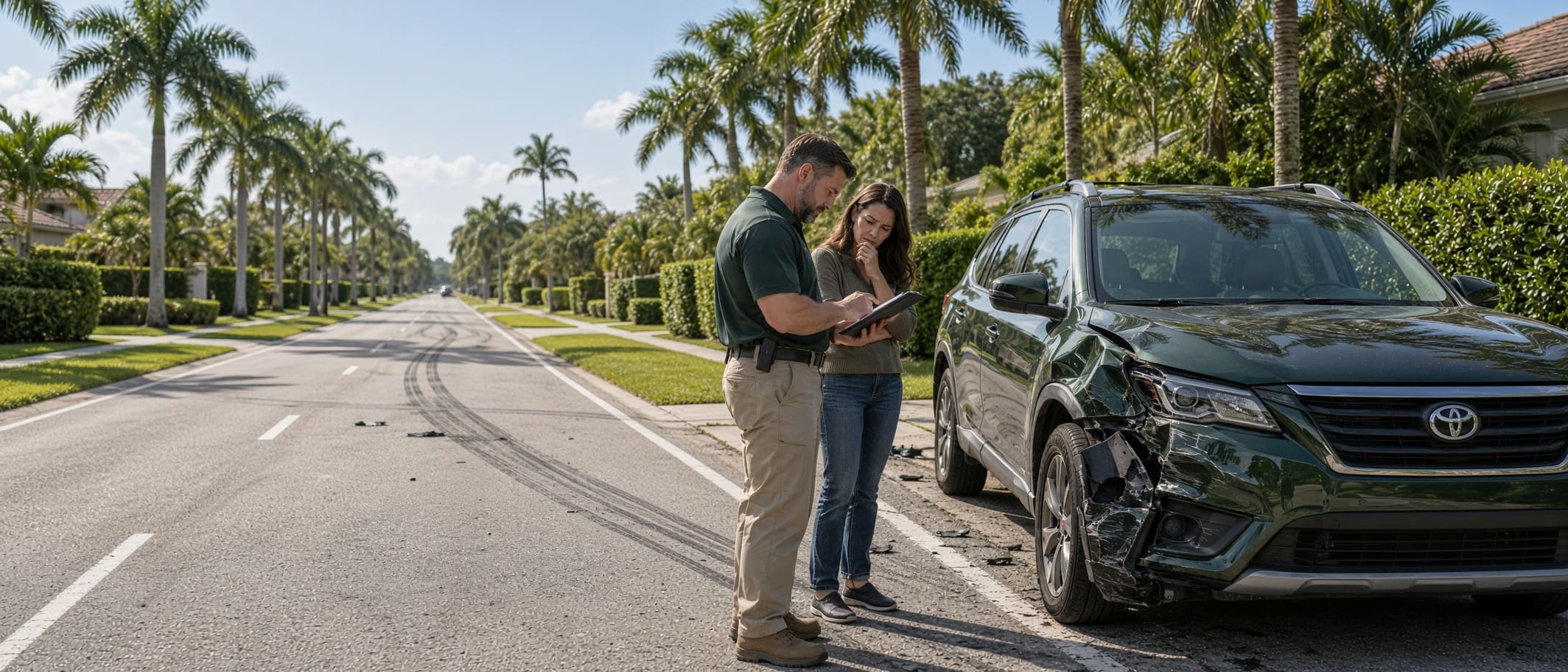
A preservation request asks a custodian to retain identified evidence. It is not automatically a subpoena, does not itself compel production, and does not by itself create a preservation duty for every independent third party. Timing, control, litigation posture, and the specific circumstances can matter.
Proving speed is not the same as proving the entire claim
Even reliable proof of excessive speed is only part of a Florida injury claim. The evidence still has to be connected to legal responsibility, causation, injuries, and damages.
Speed must matter to how the crash happened
An excessive speed may affect stopping distance, reaction time, collision avoidance, impact severity, or the ability to negotiate a curve or intersection. The relevant question is how that speed contributed to the collision or resulting harm.
Comparative fault may still be disputed
Florida's comparative-fault statute can reduce damages based on a claimant's percentage of fault and, for negligence actions covered by the statute, bars recovery when a party is found more than 50% at fault for his or her own harm. Speed evidence may therefore matter to fault allocation, not only to a yes-or-no liability decision.
Florida speeding evidence FAQ
Does a speeding ticket prove the other driver caused the crash?
No. A citation shows that an officer issued a traffic charge, but it does not automatically establish civil fault, causation, or damages. Review the facts behind the citation and compare them with the rest of the evidence.
Can a police crash report prove speeding?
A crash report may identify speed as a contributing factor, reference a citation, or record witness leads. It is not conclusive proof of speeding, and Florida Statutes section 316.066 can limit trial use of certain crash reports and statements.
Can surveillance video be used to calculate speed?
Sometimes. If the recording has reliable timing and the vehicle passes known or measurable points, a qualified analysis may estimate average speed over an interval. Camera angle, frame rate, missing frames, lens distortion, and export quality should be checked.
Can phone GPS data prove how fast a car was going?
It may help in some cases, but phone location data is not automatically the same as vehicle speed. The device's user, sampling rate, timestamp accuracy, location precision, app behavior, and connection to the vehicle need to be established.
How quickly should speed evidence be preserved?
As soon as a likely source is identified. Video and digital data may have short retention periods, and vehicle repairs can alter or erase evidence. Preservation timing is separate from the deadline for filing a lawsuit.
What if no camera captured the crash?
Speed may still be investigated through witnesses, roadway evidence, vehicle damage, EDR information, police speed-measurement records, fleet or telematics data, and reconstruction. The available sources depend on the vehicles, location, and investigation.
Free consultation
Talk to an attorney while time-sensitive evidence can still be preserved
If speeding is disputed, The Nunez Law Firm can review the available records, identify evidence sources, and explain the next steps for a Florida injury claim.
No fee unless we win. Call (407) 203-2769 or request a free case assessment online.
(407) 203-2769Legal and technical sources
- Florida Statutes section 316.183 Florida unlawful-speed rule, including reasonable and prudent speed and reduced speed for hazards and conditions.
- Florida Statutes section 316.066 Florida crash-report requirements, confidentiality provisions, and restrictions on trial use of certain crash reports and statements made by involved persons for purposes of completing a crash report.
- Florida Statutes section 316.1905 Requirements concerning electronic, electrical, mechanical, and other speed-calculating devices used by law enforcement.
- Florida Statutes section 316.1906 Florida rules governing radar speed-measuring devices, speed detection systems, and admissibility requirements.
- Florida Administrative Code Chapter 15B-2 Florida rules for approved speed-measuring devices, including accuracy checks and testing requirements for radar, laser, and other covered devices.
- Florida Statutes section 90.901 Florida Evidence Code requirement for authentication or identification of evidence.
- Florida Statutes section 768.81 Florida comparative-fault rule for covered negligence actions.
- 49 CFR Part 563 - Event Data Recorders Federal technical requirements and definitions for EDR-equipped vehicles covered by the regulation, including speed and other crash-related data elements.
- NHTSA event data recorder overview NHTSA background on EDRs, crash-related vehicle data, capabilities, and limitations.
- Driver Privacy Act of 2015 - FAST Act sections 24301-24302 Federal provisions addressing ownership of EDR data and circumstances in which access may be permitted.
This article provides general educational information and is not legal advice. Evidence rules, access rights, preservation duties, and litigation procedure can depend on the facts and procedural posture of a specific case.