
Orlando Truck Accident Lawyer
Injured in a collision with a commercial truck? The Nunez Law Firm helps Orlando and Orange County residents investigate trucking-company responsibility, preserve records, and pursue evidence-supported compensation.

When should you contact an Orlando truck accident lawyer?

When truck evidence or fault is disputed
Early review matters when injuries are serious, fault is disputed, or several businesses controlled the truck.
An attorney can identify the carrier, preserve records, and assess insurance and losses.
Why truck claims can be different
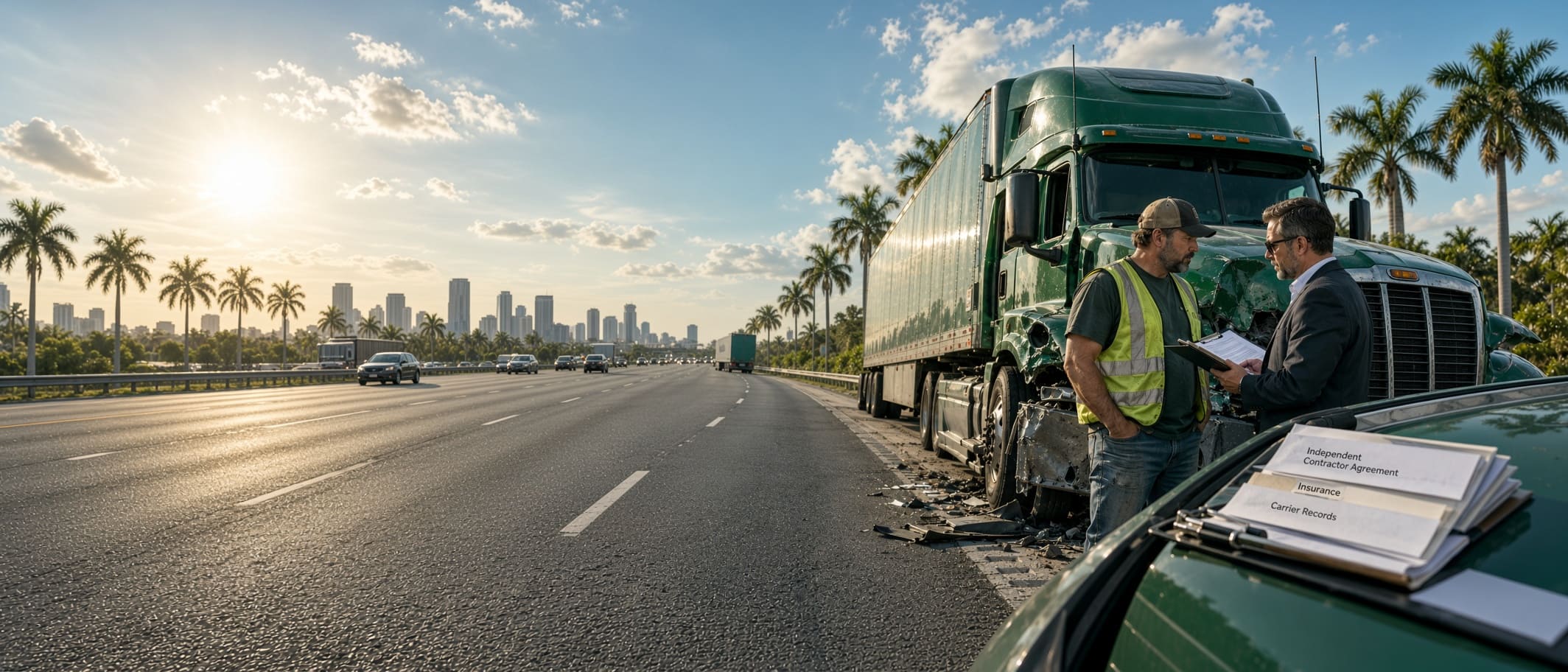
The driver, carrier, and owner can be different parties. A logo does not prove who controlled the trip or which policy covers it.
Truck Accident Cases We Handle in Orlando
Rental and trailer records can identify parties beyond the driver.
Semi‑truck collisions
Cab video and braking data can clarify a disputed lane change.
Tractor‑trailer accidents
Trailer inspections and loading instructions can explain a cargo shift.
Delivery truck crashes
Route scans and dispatch messages can identify a delivery driver and timing.
Box truck accidents
Rental contracts distinguish the owner from the operator.
Commercial fleet crashes
Telematics and work orders can reveal driver assignments and defects.
Multi‑vehicle collisions
Impact sequences and damage help assign fault across vehicles.
Where an Orlando truck crash happened changes the investigation
I‑4: For a merge dispute, note direction, exit or mile marker, lanes and damage.
Florida’s Turnpike: Note the ramp and direction; toll and camera footage may not be retained.
SR 528 (Beachline Expressway): Identify the ramp; delivery route records may identify the operator.
Example: a disputed truck lane change on I‑4
If a trailer enters a car’s lane near an I‑4 exit, impact photos and dashcam video may clarify the maneuver. ECM data may show braking or speed, but not which lane was occupied. A USDOT number can identify a possible carrier through FMCSA’s Company Snapshot; dispatch and lease records help identify who controlled the trip.
Illustrative scenario, not a firm case result.
Who can be liable for an Orlando commercial truck crash?
Responsibility follows the evidence and the applicable legal duties—not simply the logo on the vehicle.
Truck driver
Unsafe lane changes, distraction, speeding or failure to brake may support a claim against the driver.
Motor carrier or trucking company
A carrier may answer for work-related driver negligence or its own unsafe hiring, scheduling or safety practices.
Vehicle or trailer owner
A rental or leasing business differs from the operating carrier. Under the federal Graves Amendment (49 U.S.C. § 30106), a qualifying rental owner is generally not liable merely for ownership, but can remain liable for its own negligence.
Maintenance or loading contractors
A repair shop or loader may be liable when negligent work contributed to a mechanical failure or cargo shift.
Other potentially responsible parties
Another driver may have forced evasive action. For an alleged tire or brake defect, preserve the part for inspection. Contractor status does not automatically resolve carrier liability. Read our Florida independent-contractor liability guide.
What records can prove a truck accident claim?
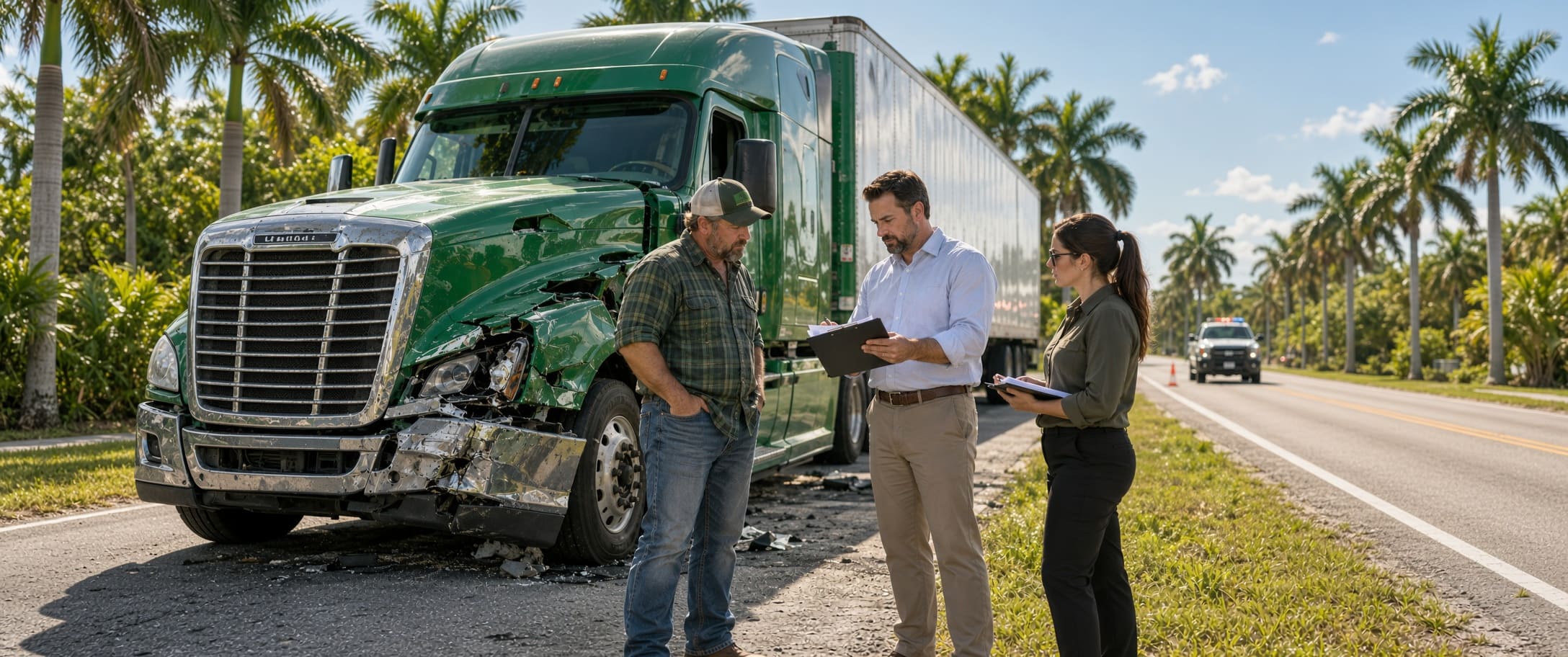
Several businesses may hold records; ELD and event data are not universal.
- ELD data and driver logs: duty status, driving periods, and possible hours-of-service issues.
- ECM or vehicle data: available speed, braking, or engine-event information, if recorded.
- Dashcam and nearby video: movements before the impact and traffic conditions.
- Maintenance and inspection records: defects, repairs, and safety checks.
- Dispatch communications: routes, instructions, and delivery timing.
- Crash and loss records: photographs, witness accounts, injuries, and income documentation.
Keep original files. Avoid cropping or editing dashcam footage and photographs; they may need to be authenticated later.
Electronic information may be overwritten, and vehicles may return to service or be repaired.
Three steps to protect time-sensitive evidence
Save the scene details
Keep original photos, dashcam files, witness contacts, the truck’s plate and visible USDOT number. Record the direction of travel and nearest exit or mile marker.
Find the crash report
Check the investigating agency on your exchange form. Reports are available through the Florida Crash Portal; for city crashes handled by Orlando Police, see OPD’s instructions.
Ask about preservation
Discuss a prompt preservation request with counsel for any available ELD, ECM, dashcam, dispatch, inspection, and trailer records. Not every vehicle has every data source.

Rules that can change an Orlando truck injury claim
FMCSA rules and hours of service
For many interstate property carriers, 49 CFR Part 395 limits driving to 11 hours within a 14‑hour window after qualifying rest, subject to exceptions.
Under Florida § 316.302, qualifying intrastate drivers may face 12‑hour driving and 16‑hour window limits instead.
Inspection and maintenance duties
49 CFR Part 396 requires systematic inspection, repair, and maintenance of covered vehicles. Records may reveal unresolved defects.
A violation alone does not prove it caused the collision.
Commercial insurance: not one limit for every truck
Many interstate for-hire carriers of nonhazardous freight using vehicles rated at 10,001+ pounds must maintain at least $750,000 in public-liability financial responsibility. Smaller delivery trucks may differ.
Florida § 627.7415 prescribes $50,000 for 26,000–34,999 lb, $100,000 for 35,000–43,999 lb, and $300,000 for 44,000+ lb covered vehicles, subject to federal requirements. These are not guaranteed payouts; excess policies and multiple claimants matter.
Deadline and comparative fault
Florida generally allows two years for negligence claims accruing after March 24, 2023. Earlier claims and special defendants need separate review.
Under § 768.81, fault reduces damages and generally bars recovery in covered actions when the claimant is more than 50% responsible.
For statewide guidance, see Florida Truck Accident Lawyer. For passenger-car cases, see Florida Car Accident Lawyer.
What compensation may be available after a truck crash?
No fixed settlement exists; recovery depends on liability, injuries and documented losses.
Medical and financial harm
- Emergency treatment and medical bills
- Rehabilitation and supported future care
- Lost income during recovery
- Reduced future earning capacity
- Vehicle repairs, towing, and other documented property losses
Long‑term and personal harm
- Physical pain and suffering, when recoverable
- Emotional distress and loss of enjoyment of life
- Permanent impairment or disfigurement
- Loss of normal activities when supported
When can pain and suffering be recovered? When § 627.737 applies, pain and suffering generally require permanent injury, significant permanent loss of an important bodily function, significant permanent scarring or disfigurement, or death. This threshold does not automatically govern every truck claim; defendant and vehicle status matter.
How an Orlando truck accident case is handled
- Initial case evaluation
Review the crash, injuries, deadlines and documents.
- Identify businesses and preserve evidence
Identify the carrier and preserve dispatch, maintenance and driver records.
- Investigate liability and coverage
Assess evidence, regulations, contracts and insurance.
- Document damages and present the claim
Document medical, employment and future losses; assess offers.
- Negotiate or litigate when appropriate
Handle insurer disputes and consider litigation.
Orlando Truck Accident Lawyer FAQ
Do I need a lawyer after an Orlando truck accident?
Serious injuries, disputed fault or perishable trucking records warrant early legal review.
Can I sue the trucking company if the driver was a contractor?
Possibly. A contractor label does not establish control. Carrier negligence or legally attributable driver conduct can still support a claim.
How long do I have to file a truck accident lawsuit in Florida?
Negligence claims accruing after March 24, 2023 generally have two years. Earlier crashes and special defendants require review; insurance negotiations do not pause the deadline.
Can truck black-box data prove the driver was speeding?
Sometimes. ECM data varies by vehicle and must be checked against physical evidence.
What if I was partly responsible for the collision?
Fault can reduce compensation. In covered negligence cases, more than 50% fault generally bars recovery under Florida law.
How much is my Orlando truck accident claim worth?
There is no fixed sum. Medical needs, lost income, fault and recoverable damages matter; insurance limits affect what can be collected.
Injured in a commercial truck collision?
Request a free evaluation of potential defendants, evidence and next steps, with no obligation to retain the firm.
Representation, fees, and case costs are governed by the written agreement.
General information, not legal advice. Liability, deadlines, and damages require individual review. Photos are illustrative, not the firm’s cases.