
Florida teen driver liability guide
Who is liable when a teen driver causes a crash in Florida?
When a teen driver negligently causes a Florida crash, the teen may be liable. Depending on the facts, liability may also involve a vehicle owner, the person who signed a minor's driver-license application, or another negligent party. Insurance coverage is a separate issue governed by the policies that apply.
Quick answer
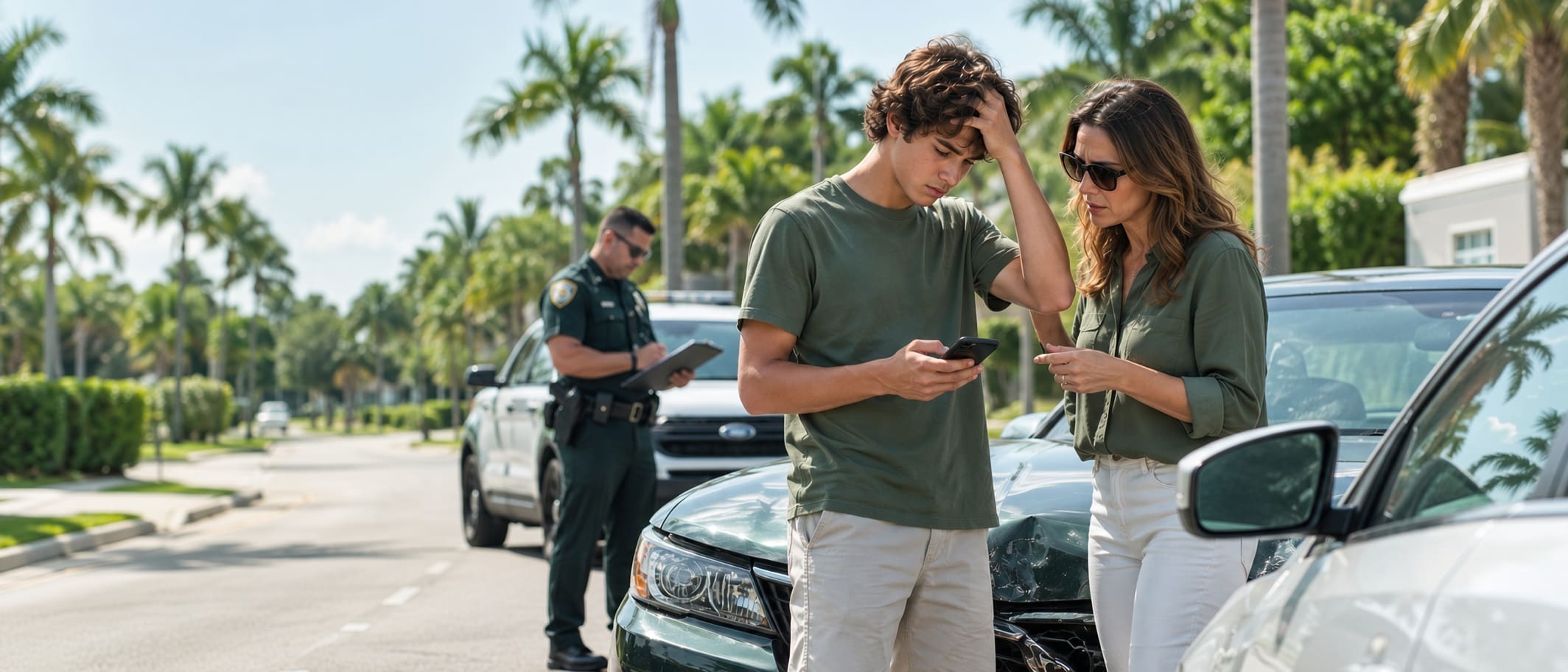
A negligent teen driver may be personally liable. Florida's dangerous instrumentality doctrine may also impose vicarious liability on a title owner or another person with a legally sufficient property interest in the vehicle. In a family-car case, a non-owner relative is not automatically an additional liable party merely because that person used the car or gave the teen permission. Separately, section 322.09 can make the signer of a minor's license application jointly liable for negligence or willful misconduct by a driver under 18 while driving a motor vehicle upon a highway, subject to statutory exceptions. Parent-child status alone does not create liability; insurance coverage is a separate question.
Who may be liable after a teen driver causes a Florida crash
Potential liability can arise from distinct legal bases: the teen driver's negligence, vehicle ownership and permitted use under Florida's dangerous instrumentality doctrine, signer liability under section 322.09 for a driver under 18 operating on a highway, or another party's independent negligence.
The teen driver
A teen can be liable for negligent driving that causes a collision. Florida courts apply an adult standard of reasonable care to a licensed minor operating a motor vehicle on public roads, rather than a more lenient child standard.
The vehicle owner or other qualifying possessor
Florida's dangerous instrumentality doctrine can impose vicarious liability on a title owner and, in some circumstances, a person with an identifiable property interest in the vehicle, such as a qualifying bailee, lessee, or renter. Property status and permission to use the vehicle are separate issues; family relationship, everyday use, or permission alone does not necessarily create an additional liable owner or bailee.
The person who signed a minor's license application
Under Florida Statutes section 322.09, negligence or willful misconduct by a driver under 18 while driving on a highway can be imputed to the person who signed the minor's permit or license application, subject to statutory exceptions. Section 322.10 also provides a way for a signer to end that chapter-based liability prospectively after the minor's license is canceled.
Another negligent person or entity
Another driver, an employer, a commercial vehicle operator, or another party may share fault when the evidence supports an independent basis for liability.
The teen driver's negligence still has to be proved
Age does not replace the ordinary negligence analysis. The evidence should show what the driver did, how that conduct departed from reasonable care, and how it caused the collision and claimed injuries.
Driving conduct to investigate
- Speed and whether the vehicle was traveling too fast for conditions
- Failure to yield, stop, keep a proper lookout, or maintain a safe following distance
- Phone use, passenger distraction, or other evidence of inattention
- Unsafe lane changes, turns, backing, or other roadway maneuvers
Evidence that can support fault
- Crash-scene photographs, video, dashcam footage, and nearby surveillance
- Witness statements and passenger accounts
- Vehicle damage, roadway marks, traffic-control evidence, and repair records
- Crash report information, lawfully obtained phone records, and relevant vehicle data
A crash report does not decide civil liability
The report can identify drivers, owners, insurers, witnesses, and initial facts, but liability depends on the full evidence and applicable law. A citation or short narrative does not replace proof of negligence, causation, ownership or entrustment, and damages.
How vehicle ownership and entrustment can create additional liability
Florida's dangerous instrumentality doctrine primarily follows ownership and other recognized property interests in the vehicle. Permission or entrustment is a separate part of the analysis, and a family member does not become an additional vicariously liable party merely by regularly using, controlling, or giving permission to use a family car.
A parent owns the car and entrusts it to the teen
Owner-based liability may apply because of the vehicle relationship, not because of the family relationship. Title and registration records help identify ownership, while testimony, messages, prior use, and other facts can show whether the vehicle was voluntarily entrusted.
A non-title family member is not automatically an owner
A family relationship, shared expenses, or helping pay for a vehicle does not by itself create the ownership interest required for dangerous-instrumentality liability. In Aurbach v. Gallina, the Florida Supreme Court declined to impose owner-based liability where the father lacked a legally sufficient ownership interest.
The teen exceeded the owner's instructions
After an owner voluntarily relinquishes control of a vehicle, violating restrictions on how or by whom it may be used does not necessarily end dangerous-instrumentality consent. Florida Supreme Court cases treat a breach of custody amounting to a species of conversion or theft as a materially different situation.
The teen took the vehicle without initial consent
When the owner never voluntarily entrusted the vehicle, the consent analysis is different. Preserve evidence about access to the keys, prior authorized use, messages, household rules, and the circumstances in which the teen obtained the vehicle.
Family-member permission does not always create a second vicariously liable party
In Emerson v. Lambert, the Florida Supreme Court held that the dangerous instrumentality doctrine did not support additional vicarious liability against a mother treated as a family-member bailee when the father was the acknowledged title owner and was already vicariously liable for the same family-car entrustment. Family-car cases therefore require attention to the vehicle's actual property interests and to which person already bears owner-based liability.
Some natural-person owners have statutory limits on vicarious liability
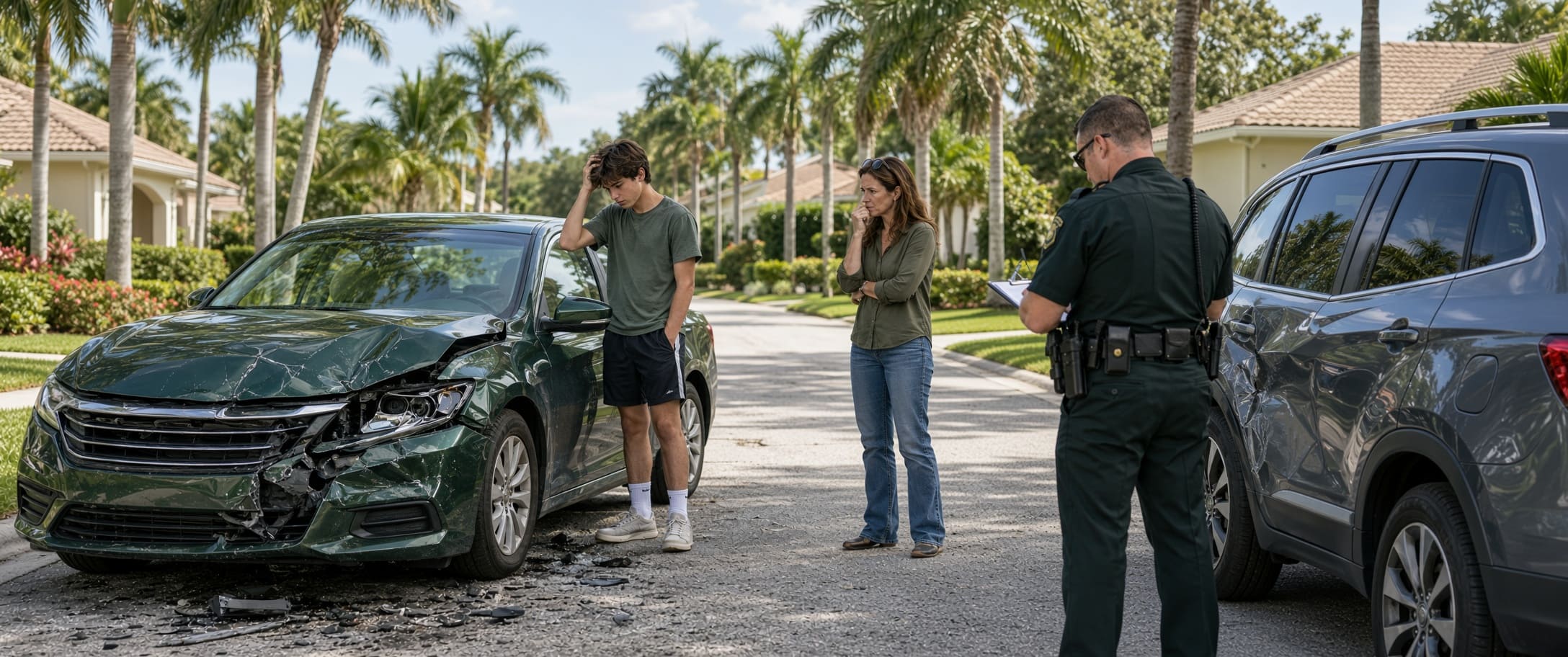
Florida Statutes section 324.021(9)(b)3 places limits on the vicarious liability of certain natural-person owners who loan a motor vehicle to a permissive user, subject to the statute's conditions and additional economic-damages provision. Those limits do not eliminate liability based on the owner's own negligence.
When a parent, guardian, or license signer may be liable
A parent or guardian is not liable solely because of the family relationship. Potential liability must rest on a recognized basis, such as section 322.09 signer liability, qualifying vehicle ownership and permitted use, agency or conduct the parent directed or sanctioned, negligent entrustment, or a narrow failure-to-control theory supported by the facts.
Signing a permit or license application for a driver under 18
Section 322.09 imputes a minor driver's negligence or willful misconduct on a highway to the person who signed the minor's permit or license application and makes that signer jointly and severally liable with the minor for resulting damages. Subsection (4) creates a limited exception for specified caregivers of minors in out-of-home care, authorized residential group-home representatives, qualifying caseworkers, and guardians ad litem specifically authorized by the minor's caregiver when they sign a learner's driver license application under the statutory conditions. Subsection (5) separately allows a caseworker at the agency where the state has placed a minor in foster care to sign the minor's driver license application pursuant to a court-approved transition plan; after the required notice, the caseworker does not assume liability for the minor's negligence or willful misconduct merely by signing. Subsection (1) also states that the section does not apply to a minor emancipated by marriage.
Cancellation can end signer liability for later crashes
Under section 322.10, a signer may file a verified written request asking the department to cancel the minor's license. Once the department cancels it, the signer is relieved from liability imposed under chapter 322 by reason of the signature for the minor's subsequent negligence or willful misconduct.
The parent's own conduct can create a separate basis
Florida cases recognize limited parental-liability theories beyond mere paternity, including negligent entrustment, agency, conduct the parent directs or sanctions, and narrow failure-to-control claims. Snow v. Nelson explains that failure to control requires a concrete factual basis tied to prior conduct making the particular risk reasonably foreseeable; the teen's age alone is not enough.
What changes when the driver is 18 or 19
The signer-liability provision in section 322.09 applies to a driver under 18. For an 18- or 19-year-old driver, focus instead on the driver's own negligence, vehicle ownership and entrustment, any independently negligent party, and applicable insurance.
Insurance coverage is separate from legal fault
A person can be legally responsible while the available insurance depends on the actual policy. Review the insured vehicle, named insureds, driver status, endorsements, exclusions, liability limits, and any additional policies that may apply.
The vehicle's liability policy
Check the declarations page and policy language for the insured vehicle, named insured, bodily injury liability limits, property damage limits, and who qualifies as an insured or covered driver.
Named-driver exclusions
Florida section 627.747 permits specified coverages to be excluded for an identified driver who is not a named insured when the statutory requirements are satisfied. If the teen is listed as an excluded driver, the policy documents and endorsement should be reviewed before assuming coverage exists.
Household, excess, and umbrella coverage
Another household policy or an excess or umbrella policy may matter depending on insured status, covered autos, underlying limits, and exclusions. Do not stop after finding one declarations page.
UM/UIM coverage for the injured person
If applicable liability coverage is absent or insufficient, the injured person's uninsured or underinsured motorist coverage may become relevant. For the separate coverage rules, see the Florida UM/UIM coverage guide.
PIP does not decide who caused the crash
Florida Personal Injury Protection is no-fault coverage and is analytically separate from a fault-based liability claim. For the distinction between no-fault benefits and a bodily injury claim, see Florida PIP vs bodily injury claim.
A written coverage request can identify additional insurance
Florida Statutes section 627.4137 requires an insurer that does or may provide liability coverage to disclose specified policy information within 30 days after a claimant's written request, including liability limits, known coverage defenses, a policy copy, and known excess or umbrella insurance.
Evidence to preserve in a teen-driver liability claim
Preserve evidence that answers four separate questions: who drove negligently, who owned or possessed the vehicle, whether the vehicle was voluntarily entrusted, and what insurance may apply.
Vehicle and electronic evidence can disappear
If speed, braking, distraction, or pre-impact vehicle behavior is disputed, physical inspection, video, phone evidence, and available event data may be time-sensitive. A damaged vehicle can be repaired, sold, or destroyed, and surveillance systems may overwrite recordings.
How comparative fault can affect recovery in Florida
A teen driver can be negligent without being the only person at fault. In a negligence action covered by Florida Statutes section 768.81, damages are reduced according to a claimant's percentage of fault, and a party found more than 50% at fault for that party's own harm generally may not recover damages.
Shared fault can reduce damages
If the injured person bears a percentage of fault that does not trigger the statutory bar, recoverable economic and noneconomic damages are generally reduced in proportion to that percentage.
More than 50% can bar recovery
Section 768.81 provides that a party found greater than 50% at fault for that party's own harm may not recover damages in a negligence action to which the section applies. The statute contains an exception for medical-negligence actions.
Passenger fault is not automatic
Being a passenger in a vehicle driven by a teen does not by itself establish comparative fault. Any attempt to assign fault to an injured passenger still needs a factual and legal basis.
More than one driver may share fault
Intersection crashes, chain collisions, unsafe turns, and lane-change disputes can involve negligence by multiple drivers. Section 768.81 permits fault to be apportioned among multiple parties when the evidence supports negligence by more than one person.
When legal review may be useful
Legal review becomes more useful when the driver, vehicle owner, license signer, and insured are different people or when entrustment, coverage, serious injuries, or comparative fault is disputed.
Related legal resources
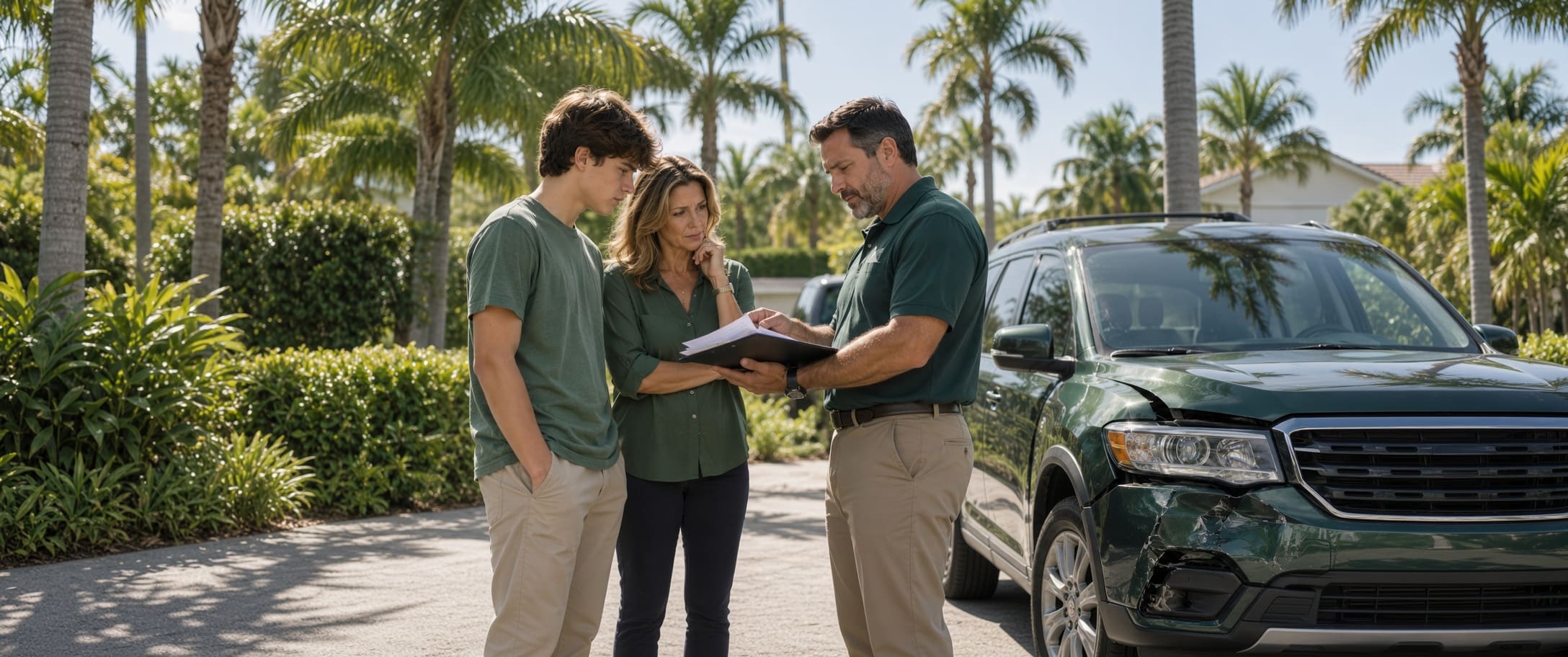
For representation focused specifically on a teen-driver collision, see the Orlando teen driving accident lawyers page. For broader Florida crash representation and claim issues, see the Florida car accident lawyer page.
Florida teen driver liability FAQ
Are parents automatically liable when their teen causes a crash in Florida?
No. Parent-child status alone does not create liability. A separate basis is required, such as qualifying vehicle ownership and permitted use, a recognized direct-liability theory, or signing the application of a driver under 18 whose negligence or willful misconduct occurs while driving a motor vehicle upon a highway under section 322.09.
What if the teen violated the owner's rules for using the car?
Not necessarily. After an owner voluntarily entrusts a vehicle, violating limits on its use does not automatically end dangerous-instrumentality consent; Florida cases distinguish ordinary deviations from a breach of custody amounting to conversion or theft.
What if the teen took the car without permission?
If there was no initial voluntary entrustment, the consent analysis changes. Key facts include how the teen obtained the vehicle, prior authorized use, access to the keys, and any evidence showing whether the vehicle was actually taken without consent.
Can the signer of a minor's license application end future liability?
Yes. Under section 322.10, after the signer files a verified written cancellation request and the department cancels the minor's license, the signer is relieved from chapter 322 liability based on the signature for the minor's subsequent negligence or willful misconduct.
Does a parent's auto policy always cover a teen living at home?
No. Coverage depends on the actual policy, insured vehicle, named insureds, driver status, household definitions, endorsements, and exclusions. Florida also permits statutory named-driver exclusions when the requirements of section 627.747 are met.
Can the injured person be partly at fault?
Yes. Under section 768.81, damages in covered negligence actions are reduced by the claimant's percentage of fault, and a party found more than 50% at fault for that party's own harm generally may not recover damages.
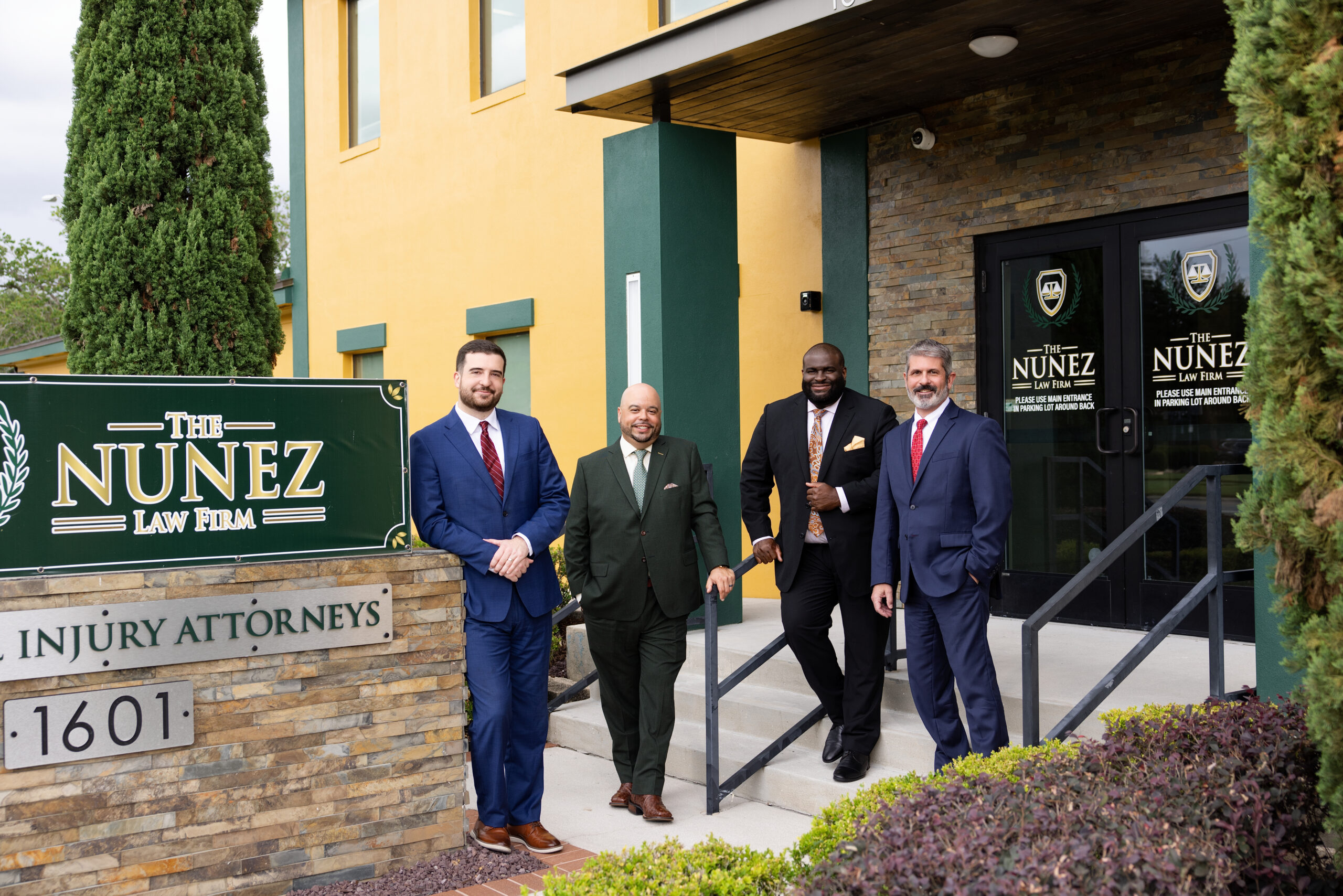
Free consultation
Need help identifying who may be liable after a teen-driver crash?
If ownership, entrustment, the license signer, insurance coverage, or fault is disputed, The Nunez Law Firm can review the records and explain which liability and coverage issues may apply to the crash.
No attorney's fee unless there is a recovery. Clients may be responsible for case costs as provided in the written fee agreement. Available 24/7 for new clients in Orlando, Fort Myers, and across Florida.
(407) 203-2769Legal authorities and official sources
-
Florida Statutes section 322.09
Rules for applications by drivers under 18 and responsibility of the signer, including the limited subsection (4) exception for specified persons signing a learner's driver license application and the separate subsection (5) foster-care caseworker exception for a driver license application signed under a court-approved transition plan. -
Florida Statutes section 322.10
Procedure allowing a signer to request cancellation of a minor's license and ending chapter-based signer liability for subsequent negligence or willful misconduct after cancellation. -
Florida Statutes section 324.021
Motor-vehicle financial-responsibility definitions and statutory limits relevant to certain owner and permissive-user liability. -
Florida Statutes section 627.4137
Liability insurance disclosure requirements, including limits, known coverage defenses, policy copies, known excess or umbrella coverage, and the 30-day response period. -
Florida Statutes section 627.727
Florida uninsured and underinsured motorist coverage requirements and rules governing rejection or selection of lower limits. -
Florida Statutes section 627.736
Florida Personal Injury Protection benefits, eligibility, exclusions, and claims rules. -
Florida Statutes section 627.747
Named-driver exclusion rules for private passenger motor vehicle policies. -
Florida Statutes section 768.81
Florida comparative-fault rules, proportional reduction of damages, and the greater-than-50% recovery bar for covered negligence actions. -
Emerson v. Lambert, Florida Supreme Court
Florida Supreme Court authority limiting additional dangerous-instrumentality liability against a family-member bailee when the acknowledged title owner is already vicariously liable for the same family-car entrustment. -
Aurbach v. Gallina, Florida Supreme Court
Florida Supreme Court authority emphasizing legal title and identifiable property interests and rejecting an expansion of owner liability based only on family relationship, household finances, or a general parental right to control. -
Chandler v. GEICO Indemnity Co., Florida Supreme Court
Florida Supreme Court discussion of dangerous-instrumentality consent, voluntary entrustment, restrictions on use, and when consent may be vitiated. -
Snow v. Nelson, Florida Supreme Court
Florida Supreme Court authority explaining that mere paternity does not create tort liability and describing limited parental-liability theories, including the narrow requirements for a failure-to-control claim. -
Medina v. McAllister, Florida Supreme Court
Florida Supreme Court authority applying an adult standard of care to a licensed minor operating a motor vehicle on public streets or highways. -
Florida Standard Jury Instructions
Official Florida courts resource for civil jury instructions, including motor-vehicle ownership and permitted-use issues.