

Primary contact
Know whether routine questions go to the lawyer, paralegal, case manager, or another team member.
Florida car accident lawyer guide
Before hiring a lawyer after a Florida crash, find out who will handle the case, how the firm will investigate it, how you will receive updates, and how fees and costs work. Clear answers matter more than promises.

Use the consultation to learn how the firm would actually handle your claim. Look for answers tied to your facts, a clear explanation of what happens next, and written financial terms you understand before signing.
These five questions help you compare how a firm would handle the relationship, investigation, insurance issues, communication, and financial terms before you sign a representation agreement.
Look for specific answers tied to your crash. Be cautious with anyone who guarantees a settlement amount or outcome before the evidence, coverage, and injuries have been reviewed.
Ask who will be responsible for your file and whether the firm has handled the same kinds of legal and factual problems your crash presents.
Ask whether your regular contact will be an attorney, paralegal, case manager, or team. Find out when you can speak directly with the lawyer and whether the responsible attorney changes if litigation begins.
A straightforward rear-end collision is different from a multi-vehicle crash, rideshare claim, commercial vehicle case, hit-and-run, disputed lane change, or uninsured or underinsured motorist dispute. Experience with the same legal and factual problems is more informative than a generic case count.
Ask how the lawyer approaches cases where both drivers are blamed and what evidence the firm would look for before taking a position on fault.
Ask whether the firm handles litigation when liability, injury causation, insurance coverage, or settlement value cannot be resolved. The answer should explain the firm's actual process, not imply that every case must go to trial.

Ask what evidence matters in your crash, what may be lost with time, and who will preserve, request, or analyze it.
Police records, photographs, vehicle damage, roadway layout, witness information, dashcam or surveillance footage, event data, traffic-control details, and other physical evidence may affect liability.
Treatment records, diagnostic studies, referrals, work restrictions, symptom progression, prior relevant history, future-care opinions, and billing records can affect causation and damages.
Wage statements, employment records, missed-work documentation, repair invoices, towing or rental charges, and proof of out-of-pocket expenses help document financial losses.
Video, vehicle data, commercial records, and witness memory may become harder to obtain as time passes. Ask which evidence needs immediate action.
A Florida car accident claim may involve more than the other driver's insurer. Depending on the facts, the analysis can include PIP, bodily injury liability, UM/UIM, MedPay, health insurance, commercial or employer coverage, and claims against additional responsible parties.
Florida PIP medical benefits generally require initial services and care within 14 days after the motor vehicle accident under section 627.736. Ask whether treatment timing, deductibles, available benefits, payment history, or a denial needs review.
Ask how the firm will identify bodily injury coverage, vehicle owners, employers, commercial policies, umbrella coverage, and other potentially responsible parties instead of assuming one policy is the only recovery source.
Uninsured or underinsured motorist coverage may become important when the at-fault driver has no bodily injury coverage or not enough coverage for the loss. The policy documents and any selection or rejection forms may need review.
Medical expenses, lost income, reduced earning ability, out-of-pocket costs, and other losses require documentation. Noneconomic damages in covered motor-vehicle tort cases may also depend on the threshold in section 627.737.
For negligence claims that accrued on or after March 24, 2023, Florida generally provides a two-year limitations period under section 95.11. Claims that accrued earlier may be governed by the prior limitations period. Different claims or defendants can involve different deadlines.
The statute of limitations is not a reason to wait. PIP treatment timing, notice requirements, evidence preservation, insurer requests, and other claim-specific deadlines may matter much earlier. Ask which dates should be calendared for your facts.
For a broader explanation of PIP, bodily injury liability, UM/UIM, MedPay, and health insurance, see the Florida car accident injury coverage guide.
Communication problems often start when expectations were never defined. Ask who will contact you, how often routine updates are provided, which developments trigger a lawyer call, and how urgent questions are handled.
Know whether routine questions go to the lawyer, paralegal, case manager, or another team member.
Ask whether updates are event-driven, scheduled, or both, and how you will know when the case is waiting on records or an insurer.
Clarify when the lawyer will speak with you about demands, settlement offers, filing suit, mediation, or other decisions that require your input.
Find out the best way to send medical updates, bills, photographs, work records, insurer letters, and new evidence.
If an insurer requests a recorded statement, ask whether the firm believes one is required under the applicable policy and who should participate. If you already gave a statement, tell the lawyer when it happened, who requested it, and what was discussed.
Do not leave the financial terms until the end of the consultation. Florida contingent-fee representation is governed by Rule 4-1.5 of the Rules Regulating The Florida Bar, and the agreement should make the fee arrangement and responsibility for costs clear in writing.
Ask which percentage or percentages apply, whether the percentage changes at different stages, and what happens if the matter is resolved before or after a lawsuit is filed.
Filing fees, medical-record charges, deposition expenses, experts, investigators, and other litigation costs are separate from the attorney fee. Ask who advances them, how they are deducted, and whether you could owe costs if there is no recovery.
Settlement proceeds can be affected by unpaid provider balances and letters of protection, as well as Medicare, Medicaid, health-plan reimbursement claims, liens, or subrogation rights. Ask what the firm will verify or negotiate and what remains your responsibility.
The client decides whether to accept a settlement. Ask how offers will be explained, what deductions are expected, and how the firm will estimate the net amount before you make that decision.
Ask for the written fee agreement and any client-rights document that applies. Make sure you understand the attorney fee, case costs, authority to make decisions, and how a final settlement statement will account for deductions.
Two answers deserve particular caution before you sign.
A lawyer can explain the factors that affect a claim, but should not promise a settlement amount or outcome before the evidence is reviewed.
You should have time to read the agreement and get answers to material questions before retaining the firm.
Bring what you already have; you do not need a complete file. These documents help the lawyer spot urgent issues and identify what is still missing.

Bring provider statements, collection notices, health-plan correspondence, Medicare or Medicaid notices, and any letter of protection. You can also review medical liens after a Florida car accident before the meeting.
No. A consultation can be used to understand your options and compare firms. Before signing, make sure you know who will handle the case, how communication works, and what the written fee agreement requires.
Tell the lawyer what was said, whether the statement was recorded, and which insurer requested it. Bring any related emails, texts, letters, or claim notes. The statement should be reviewed together with the rest of the evidence rather than treated in isolation.
A lawyer may be able to discuss the factors that affect value, but an early estimate can change as medical treatment, liability evidence, insurance coverage, wage loss, prior conditions, and other facts become clearer. Be cautious with a guaranteed number before those issues are investigated.
Free consultation
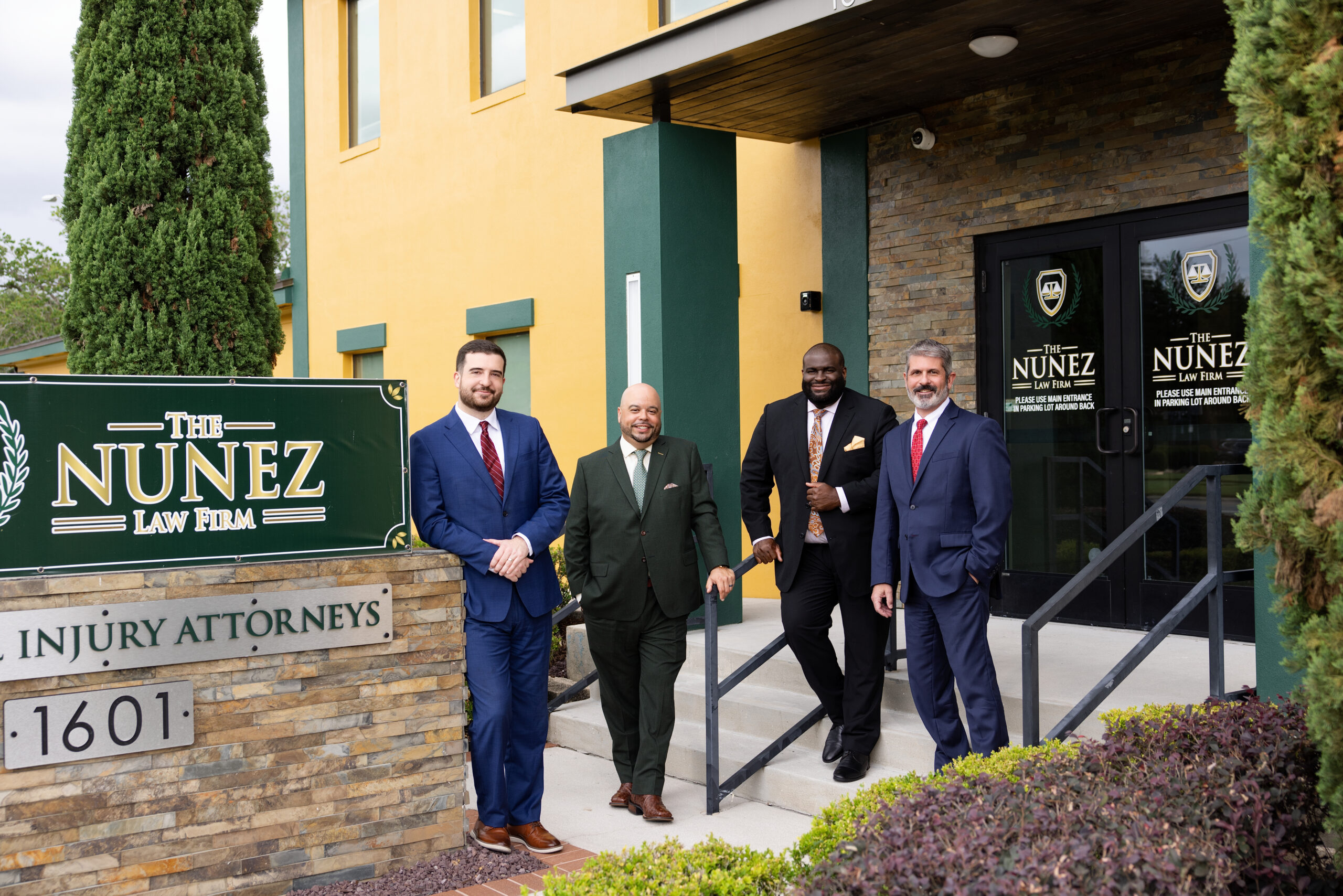
If you were injured in a Florida crash, The Nunez Law Firm can review the accident, insurance issues, medical documentation, and the questions that should be resolved before you decide how to proceed.
No attorney's fee unless there is a recovery. Responsibility for case costs is governed by the written fee agreement. Available 24/7 for new clients in Orlando, Fort Myers, and across Florida.
(407) 203-2769