
Florida Intersection Accident Lawyer
Intersection Car Accidents in Florida: Red Lights, Failure to Yield, and Left Turns
Red-light, failure-to-yield, and left-turn crashes often turn on signal timing, right-of-way, video, witnesses, vehicle damage, and the point of impact.
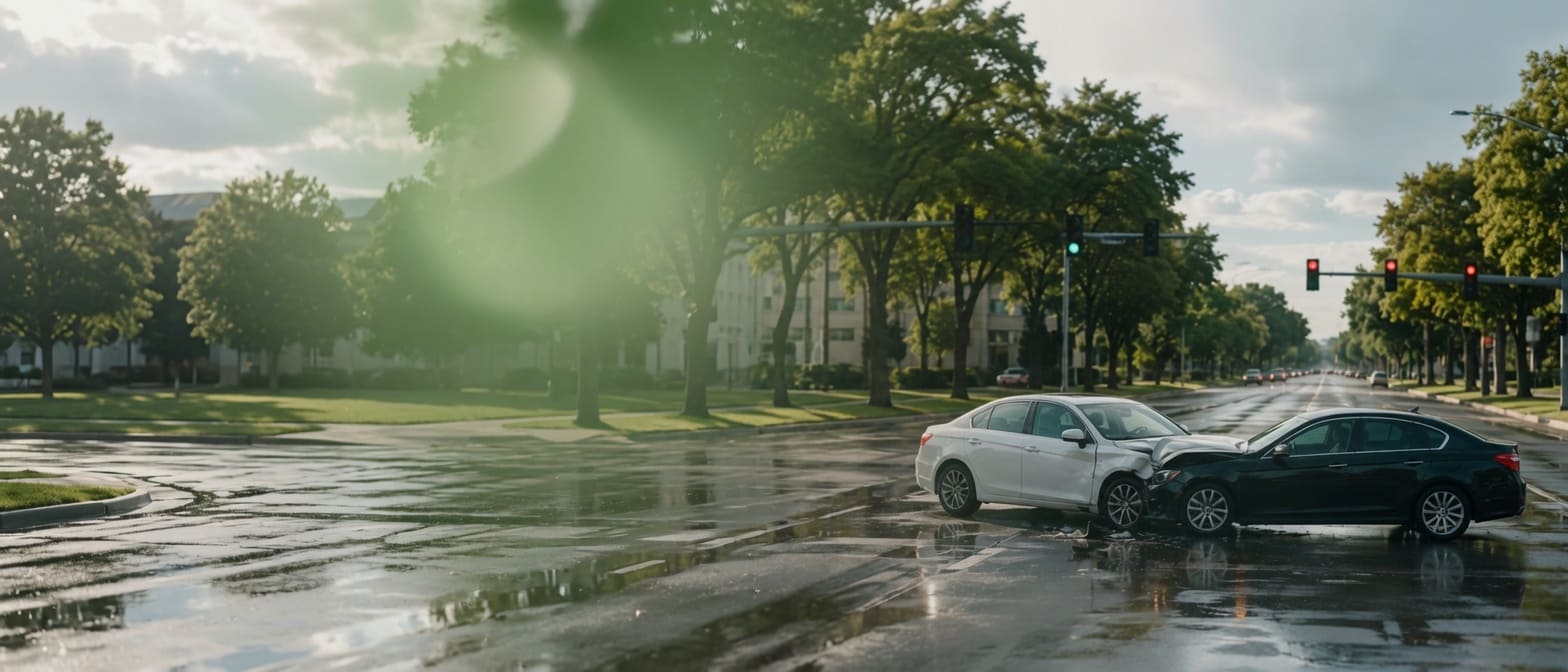
What matters most after a Florida intersection crash?
The most important facts are right-of-way, traffic lights or signs, left-turn rules, witness accounts, video, vehicle damage, road layout, speed, distraction, visibility, and the point of impact. When an insurer challenges a red light, failure-to-yield, or left-turn claim, preserving proof early helps prevent the case from becoming one driver's word against another.
After an intersection crash in Florida, the dispute often comes down to facts that are easy to lose: signal timing, turn-arrow status, right-of-way, driver attention, witness memory, and the point of impact. The collision may take only a few seconds, but the claim can become difficult when drivers, passengers, witnesses, or insurers give different versions of what happened.
The Nunez Law Firm helps injured people after red light collisions, left-turn crashes, failure-to-yield accidents, T-bone impacts, and other disputed liability cases throughout Florida.
Why Intersection Accidents Are Often Disputed in Florida
Several people may remember the same impact differently
One driver says the light was green. Another says the turning vehicle failed to yield. A passenger remembers the impact but not the signal. A witness saw only the final seconds before the vehicles collided.
When the story is unclear, insurers use that uncertainty to reduce, delay, or deny payment. Photos, video, crash damage, witness names, police observations, medical records, and nearby business cameras can help show what actually happened at the scene.
Right-of-way matters, but it is not the only issue
Even when one driver appears to have had the right-of-way, the claim still turns on speed, distraction, lookout, lane position, yellow-light timing, and whether either driver had a reasonable chance to avoid the collision.
Important proof usually comes from the scene layout, traffic controls, signal timing, lane positions, turning movements, skid marks, debris, event data, dashcam footage, repair estimates, and medical records.
Common intersection crash patterns
Red Light Accidents in Florida
A red light case may look straightforward at first, but the proof is frequently contested. Drivers may disagree about whether the light was red, yellow, or green; whether a turn arrow was active; whether a vehicle entered late; or whether a driver was already lawfully inside the intersection when the impact occurred.
Proof that helps show a red light violation
The most helpful proof is usually the evidence that shows the intersection before and at impact: dashcam video, nearby surveillance, witness names, signal timing, damage location, debris, lane markings, and photos taken before vehicles are moved.
Traffic or intersection camera footage, where it exists and can be obtained, should be requested quickly. Business cameras, dashcams, doorbell systems, and other recording devices sometimes overwrite footage within days or sooner.
How insurers challenge red light cases
An insurer may argue that the light was yellow, that the injured driver entered too late, that another vehicle blocked visibility, that both drivers share blame, or that the injuries do not match the force of the impact.
A well-supported claim connects the traffic proof to the medical records, vehicle damage, treatment history, missed work, and the way the injuries changed daily life.
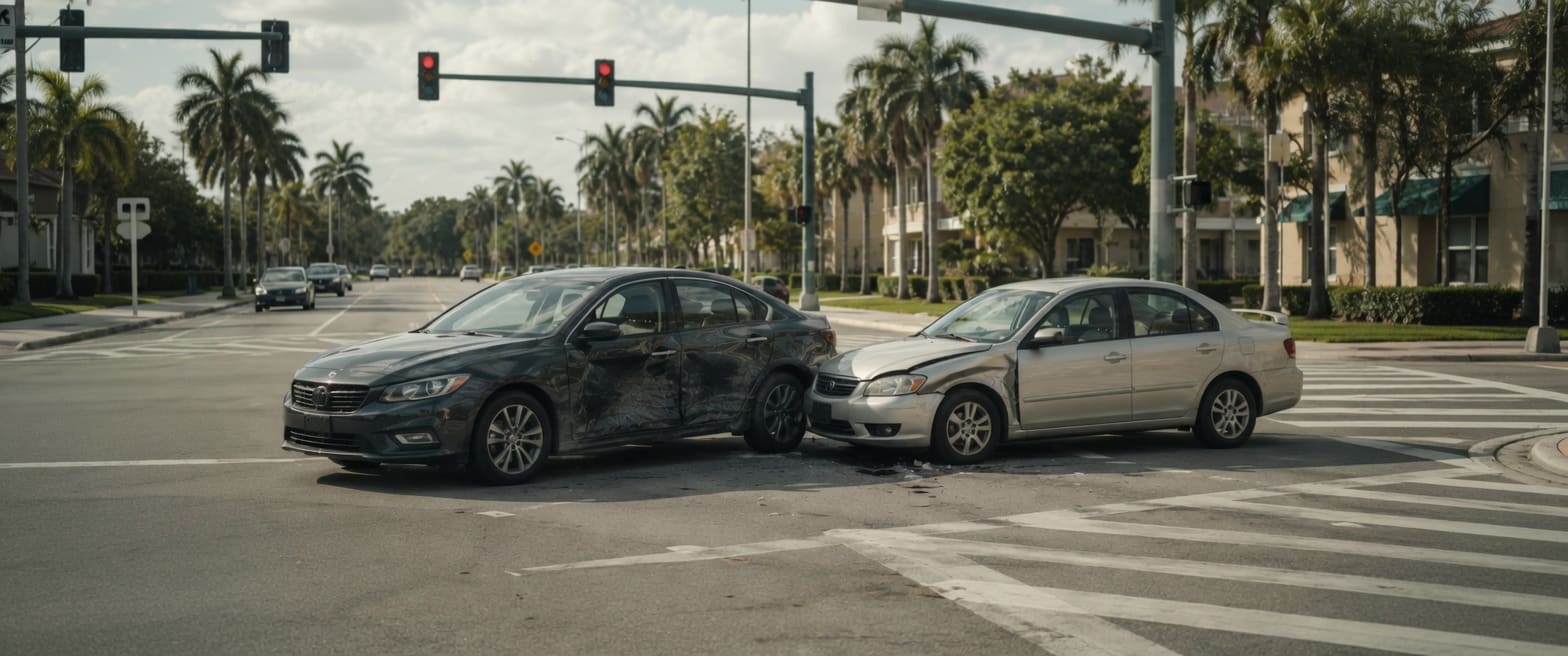
Left Turn Crashes and Failure to Yield
Left-turn crashes happen when a driver must judge distance, speed, traffic gaps, pedestrians, bicyclists, turn-arrow timing, and oncoming vehicles at the same time. A small error can lead to a serious side-impact collision.
Left turn across oncoming traffic
A driver turning left must yield to oncoming vehicles that are in the intersection or close enough to create an immediate hazard. When the turning driver misjudges the gap, the case often becomes a failure-to-yield dispute.
Protected arrow vs. unprotected turn
A protected green arrow is different from a permissive left turn. In a contested claim, the timing of the arrow, the lane position of each vehicle, and witness accounts become central to liability.
Oncoming speed and attention
The turning driver is usually the focus, but the oncoming driver's speed, distraction, lane use, or late entry into the intersection can also affect how responsibility is reviewed.
For your claim
Do not rely only on a verbal statement that the other driver "turned in front of you" or "ran the red light." Preserve proof. Photos, video, witness names, repair records, medical records, and insurance correspondence help show how the collision happened and how the injuries affected your life.
How Fault Is Reviewed After an Intersection Car Accident in Florida
Traffic rules and driver conduct
The review usually begins with the traffic control device: red light, green light, turn arrow, stop sign, yield sign, or lane marking. Then the facts are compared to what each driver did. Did one driver enter against a red light? Did a left-turning driver fail to yield? Did someone roll through a stop sign? Was either driver distracted by a phone?
A traffic citation matters, but it does not stand alone. A civil injury claim also depends on witness statements, crash reconstruction issues, medical records, coverage, and the damage pattern on the vehicles.
Comparative fault issues
Florida comparative fault rules affect recovery when more than one person contributed to the harm. In negligence actions covered by Florida Statutes section 768.81, a party found greater than 50 percent at fault for his or her own harm may not recover damages, except as stated in the statute for medical negligence actions.
In an intersection case, an insurer may say one driver failed to yield while another driver was speeding, distracted, or entering late. Fault percentages should be challenged when they are not supported by the proof.
Proof that affects liability
What to Do After an Intersection Accident in Florida
The first steps after a collision affect both medical recovery and the injury claim. Get medical care first if you are hurt. Then preserve records and scene proof before they disappear.
1. Get medical care and follow treatment instructions
Some injuries become more noticeable after the adrenaline wears off. Medical records document symptoms, diagnosis, treatment, restrictions, and the connection between the collision and the injury.
Florida PIP benefits involve a 14-day requirement for initial medical services and care after a motor vehicle accident. Waiting too long can create insurance problems even when the impact was serious. Read more about the Florida PIP 14-day rule.
2. Photograph the scene if it is safe
Photos of the traffic lights, stop signs, turn lanes, skid marks, debris, vehicle damage, road conditions, and visible injuries help later when liability is disputed.
3. Identify witnesses and possible video sources
Witness names, phone numbers, nearby businesses, doorbell cameras, dashcams, and surveillance systems can become important. Recording systems do not always keep footage for long, so early preservation is important.
4. Be careful with recorded statements
Insurance adjusters may ask questions before you know the full facts, treatment plan, or impact of the injury. Avoid guessing about speed, distance, signal color, or pain level when you are unsure.
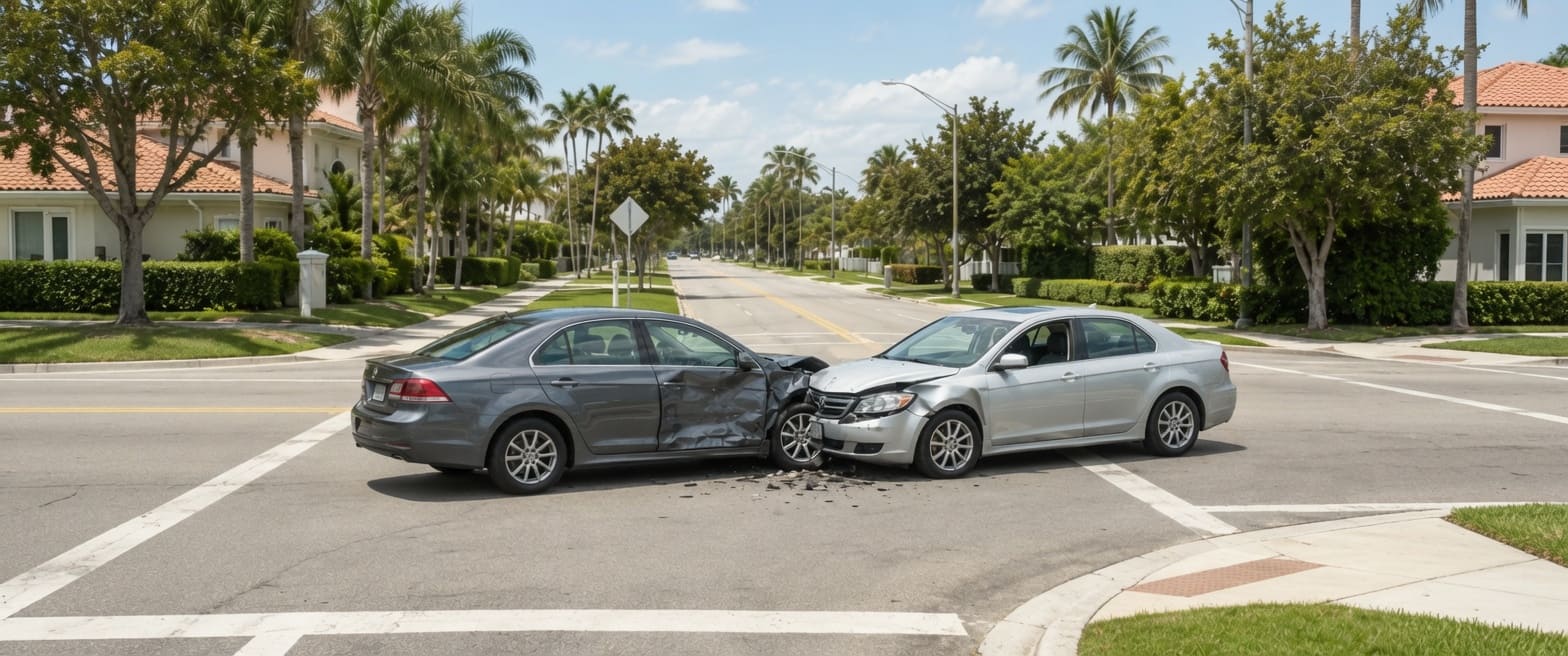
Crash Reports, Video, and Early Evidence
A crash report is useful, but it is not the whole case
A Florida crash report can include driver information, insurance details, vehicle descriptions, crash location, responding officer observations, citations, diagrams, and witness information. It helps organize the claim, but it does not automatically decide a civil injury case.
Insurers still examine liability, injury causation, treatment, damages, coverage, and claim value. The report should be compared with photos, video, vehicle damage, medical records, and witness accounts. For a deeper explanation, see our guide on how to get and use a Florida car accident police report.
Florida crash reports may be confidential for 60 days
Florida crash reports that reveal personal information are generally confidential and exempt from public disclosure for 60 days after the report is filed. During that period, access is limited to people and entities allowed by statute, including parties involved in the crash, their legal representatives, insurers, certain agencies, and other listed recipients.
If signal color, right-of-way, or witness identity is disputed, request the report and preserve video as soon as possible.
Crash report cost through the Florida Crash Portal
FLHSMV lists the cost of a Florida crash report as $10 per report. When the report is purchased through the Florida Crash Portal, a $2 convenience fee is added to the transaction.
Keep a copy of the receipt and the report. Those records can help identify insurance information, witnesses, agencies, and other details needed to organize the claim.
Crash report privilege and admissibility
Florida law gives special treatment to certain crash reports and statements made for completing those reports. Statements made by a person involved in a crash to law enforcement for the purpose of completing the report are generally protected from being used as evidence at trial in a civil or criminal case arising from the crash, subject to statutory exceptions.
This does not make the report useless. It can guide the investigation, identify witnesses and insurance information, and help locate independent proof. Photos, video, witness testimony, medical records, repair records, and an officer's independent observations may still matter.
Florida Deadlines Can Affect an Intersection Accident Claim
Florida Statutes section 95.11 places many negligence actions and wrongful death actions in a two-year limitations category. The deadline can change depending on the facts, the type of claim, the parties involved, and whether a specific exception applies.
Waiting also weakens the case. Cameras overwrite footage, witnesses become harder to locate, vehicles are repaired, and insurers can build a blame argument before the injured person has gathered proof.
Keep in mind
The safest approach is to review the crash date, treatment timeline, available insurance, and potential defendants before evidence disappears or a deadline becomes a problem.
Injuries After Red Light, Left Turn, and Failure-to-Yield Crashes
Intersection collisions often involve side impacts, angled impacts, sudden braking, or a vehicle being pushed into another lane or object. These forces can cause injuries even when the vehicles do not appear destroyed.
Common injuries involve the neck, back, shoulders, knees, wrists, head, ribs, and soft tissue. More serious impacts can involve fractures, concussions, nerve symptoms, surgery, or long-term limitations.
Insurers frequently question delayed pain, gaps in treatment, prior medical history, or whether the impact was severe enough to cause the injury. Consistent treatment, clear records, and accurate documentation help answer those arguments.
For more information about Florida motor vehicle injury claims, visit our Florida car accident lawyer page.
Insurance Issues After a Florida Intersection Crash
These claims involve PIP benefits, bodily injury coverage, uninsured or underinsured motorist coverage, property damage, medical bills, lost income, and disputes over liability. If more than two vehicles are involved, multiple carriers may argue over coverage, responsibility, and payment.
PIP and medical treatment
Florida motor vehicle claims often involve Personal Injury Protection benefits. Medical timing, treatment records, billing, and the type of care received affect how benefits are handled.
Bodily injury and UM coverage
If another driver caused the collision, bodily injury coverage becomes important. If that driver has no insurance or not enough insurance, uninsured or underinsured motorist coverage may also matter.
Disputed liability
An insurer may say you entered late, failed to see a hazard, drove too fast for the conditions, or contributed to the impact. When an insurer shifts blame without solid proof, photos, witness statements, video, and damage patterns are often what keep the claim from becoming one driver's word against another.
Property damage and injury value
Vehicle repair records help show impact direction and severity, but injury claims also depend on medical records, pain, limitations, missed work, and how the injury affects daily life.
When the insurer blames you for the crash
If the insurer says you were partly responsible, read our guide on what happens when you are partly at fault in a Florida car accident.
How a Florida Car Accident Lawyer Can Help
Investigating how the collision happened
A lawyer can examine the crash report, photos, witness information, video sources, damage patterns, traffic controls, road design, medical records, and coverage. In more serious cases, expert review may be needed to address speed, timing, visibility, or impact direction.
Handling the insurance dispute
A lawyer can communicate with insurers, respond to blame arguments, organize medical proof, document lost income, review settlement offers, and prepare the claim for litigation if the insurer does not fairly evaluate the facts.
Florida Intersection Accident FAQ
Who is at fault in a Florida left-turn accident?
Fault depends on the facts. A left-turning driver may be responsible if they failed to yield to oncoming traffic, but the other driver's speed, signal timing, distraction, and lane position may also be reviewed.
What evidence helps prove a red light accident?
Helpful proof includes dashcam footage, nearby surveillance video, witness statements, traffic signal timing, crash report details, vehicle damage, debris location, photos of the scene, and medical records.
Can both drivers share fault in an intersection crash?
Yes. An insurer may argue that both drivers contributed to the collision. For example, one driver may have failed to yield while the other was speeding, distracted, or entering the intersection late.
Does Florida PIP apply after an intersection crash?
It may. Florida motor vehicle claims often involve Personal Injury Protection benefits, and PIP medical benefits may depend on receiving initial medical services and care within 14 days after the crash.
What should I do if the other driver says I ran the light?
Do not guess or argue at the scene. Get medical care if needed, report the crash, take photos if safe, identify witnesses, preserve video sources, notify your insurer, and speak with a lawyer before giving broad recorded statements.
Do traffic tickets decide the injury claim?
A citation may be important, but it does not automatically resolve every issue in a civil injury claim. Insurers may still dispute liability, injury causation, treatment, damages, and coverage.
How soon should I request video after an intersection accident?
As soon as possible. Businesses, dashcams, doorbell cameras, and other video systems may overwrite footage quickly. Early preservation is important when signal color or right-of-way is disputed.
How long do I have to bring a Florida intersection accident claim?
Florida Statutes section 95.11 places many negligence actions and wrongful death actions in a two-year limitations category. The exact deadline depends on the facts, the type of claim, the parties involved, and any applicable exception.
Free Case Assessment
Speak with The Nunez Law Firm
The Nunez Law Firm represents injured people after Florida car accidents, including red light crashes, left-turn collisions, failure-to-yield accidents, and disputed liability claims. Contact our team for a free case assessment.
Call (407) 203-2769Official Sources
-
Florida Statutes Section 316.075
Explains how Florida traffic signals apply to drivers, including green lights, yellow lights, red lights, and turn arrows. -
Florida Statutes Section 316.122
Explains when a driver turning left must yield to oncoming traffic at or near an intersection. -
Florida Statutes Section 316.123
Explains driver duties at stop signs, yield signs, and other stop or yield intersections. -
Florida Statutes Section 316.066
Explains Florida crash report rules, the 60-day confidentiality period, and the special treatment of certain crash report statements. -
Florida Highway Safety and Motor Vehicles - Crash Reports
Explains how to request Florida crash reports and lists the report cost through the Florida Crash Portal. -
Florida Statutes Section 768.81
Explains comparative fault rules for covered negligence actions in Florida. -
Florida Statutes Section 95.11
Explains limitation periods that can affect negligence and wrongful death actions. -
Florida Statutes Section 627.736
Explains Florida Personal Injury Protection benefits, including the 14-day initial care requirement.
This article is for general informational purposes only and is not legal advice. Reading this page does not create an attorney-client relationship. The outcome of any Florida car accident claim depends on the specific facts, evidence, insurance coverage, injuries, deadlines, and applicable law.