

Actual incapacity
The driver lost consciousness or the ability to control the vehicle; feeling unwell alone is insufficient.
Florida liability and evidence
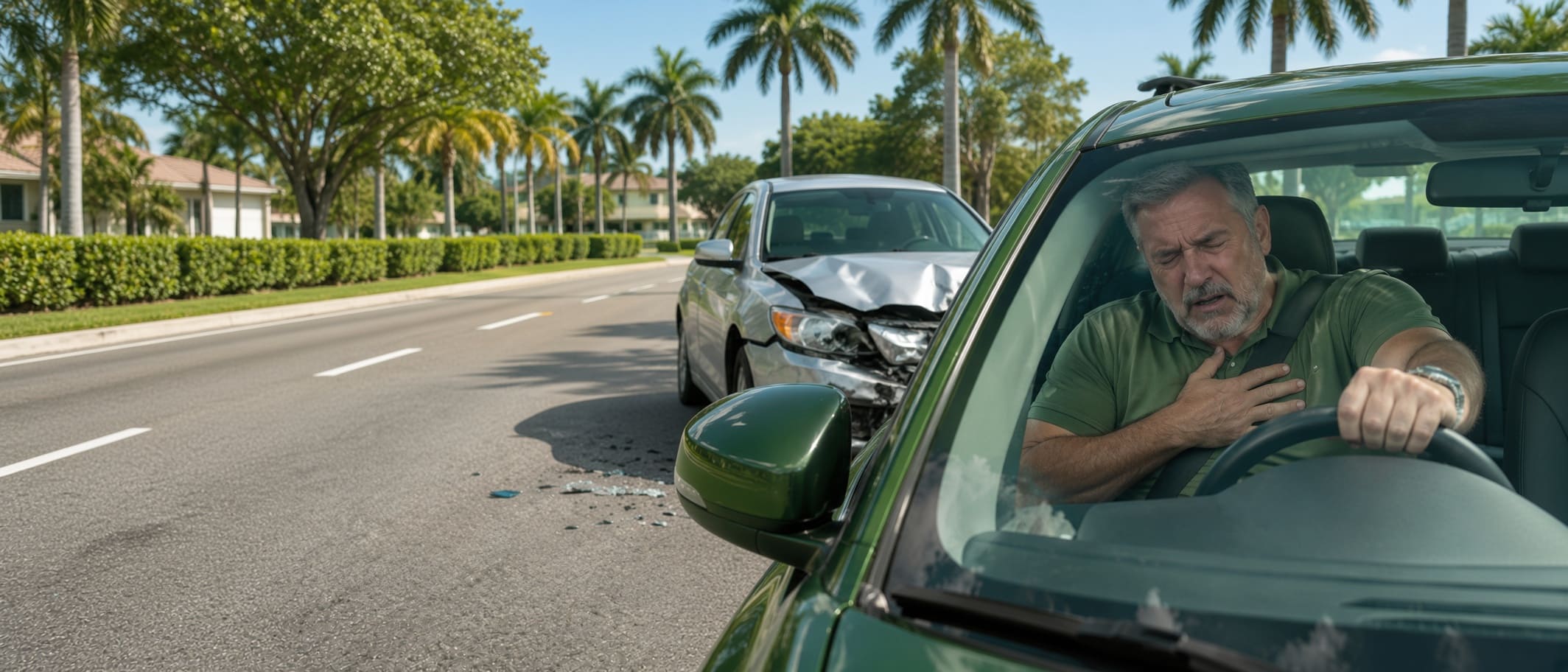
A driver crashes after a seizure, heart attack, or sudden blackout. Their insurer says the medical event was unavoidable. That may be a valid defense in Florida, but the diagnosis alone does not decide who is legally responsible. The timing of the episode and what the driver could reasonably anticipate are critical.
Florida recognizes a defense for a sudden, unforeseeable loss of consciousness or capacity. The driver asserting it must show actual incapacity, that it began before the allegedly negligent conduct, that it was sudden, and that it was neither foreseen nor reasonably foreseeable. A medical emergency does not automatically eliminate an injured person’s other insurance options.
Negligence usually requires a failure to use reasonable care. A collision itself does not prove that the driver breached that duty. Someone who unexpectedly becomes unconscious may have no meaningful opportunity to steer, brake, or avoid the impact.
The result can differ when a driver knew, or reasonably should have known, that continuing to drive posed a risk of incapacitation. Ignoring a clear medical warning, a driving restriction, or symptoms that left time to pull over may support a negligence claim. An employer or vehicle owner is not automatically responsible simply because a crash occurred; any claim against them needs its own legal basis.
In Marcum v. Hayward, the Second District Court of Appeal restated four facts a defendant must prove to establish the sudden loss of consciousness or capacity defense:
The driver lost consciousness or the ability to control the vehicle; feeling unwell alone is insufficient.
The incapacity occurred before the conduct alleged to be negligent, not as a consequence of the collision.
The disabling event arose abruptly rather than through a period of avoidable, deteriorating control.
The loss of capacity was neither actually anticipated nor reasonably predictable beforehand.
This is an evidence-dependent defense, not an automatic exemption for any driver who reports a medical incident. The burden of establishing the defense rests with the party asserting it.
A first-ever seizure may be unforeseeable when there was no history or warning suggesting a seizure risk. A heart attack or fainting episode can also be unexpected, depending on what the driver knew and experienced before losing control.
Short-lived dizziness, nausea, or a vague strange feeling does not necessarily tell an ordinary driver that complete incapacitation is imminent. In Marcum, a brief report of feeling unwell did not establish that the driver should have anticipated the seizure. By contrast, specific, escalating symptoms combined with sufficient time to stop can materially change the analysis. The issue is not whether a medical explanation was found afterward, but whether the danger was reasonably apparent before the crash.
Epilepsy, heart disease, diabetes, or a prior fainting episode may justify closer investigation. But a diagnosis by itself is not proof that a driver acted negligently. Relevant questions include recent attacks, treatment history, doctor-imposed driving limits, medication changes, and specific warnings about possible loss of consciousness.
A person with a stable, treated condition and no warning may have a different case from someone who disregarded repeated episodes or explicit advice not to drive. The severity and timing of symptoms matter more than a label in a medical chart.
| Circumstance | What must be established |
|---|---|
| First unexpected episode | Whether any meaningful warning existed and whether the driver had enough time to react. |
| Known medical condition | Whether the history, medical advice, or recent events made losing control reasonably foreseeable. |
| Symptoms before impact | The nature and duration of symptoms, and whether a safe stop remained realistically possible. |
| Loss of consciousness after impact | Whether incapacity actually preceded the alleged negligence rather than resulting from the collision. |
The most important reconstruction is a timeline: what happened in the minutes before the crash, when control was lost, and when the vehicles collided. An insurer’s statement that the driver “blacked out” is not a substitute for proof.
EMS observations, hospital findings, relevant prior treatment, medication history, and specialist opinions may address the cause and predictability of incapacity.
Passenger and witness accounts may show warning statements, unusual driving, efforts to pull over, or the driver’s condition immediately after impact.
Dashcams, nearby cameras, and available vehicle event data may help establish braking, steering, speed, and the sequence of events.
Medical and accident-reconstruction experts may help distinguish pre-impact incapacity from a medical problem caused by the collision.
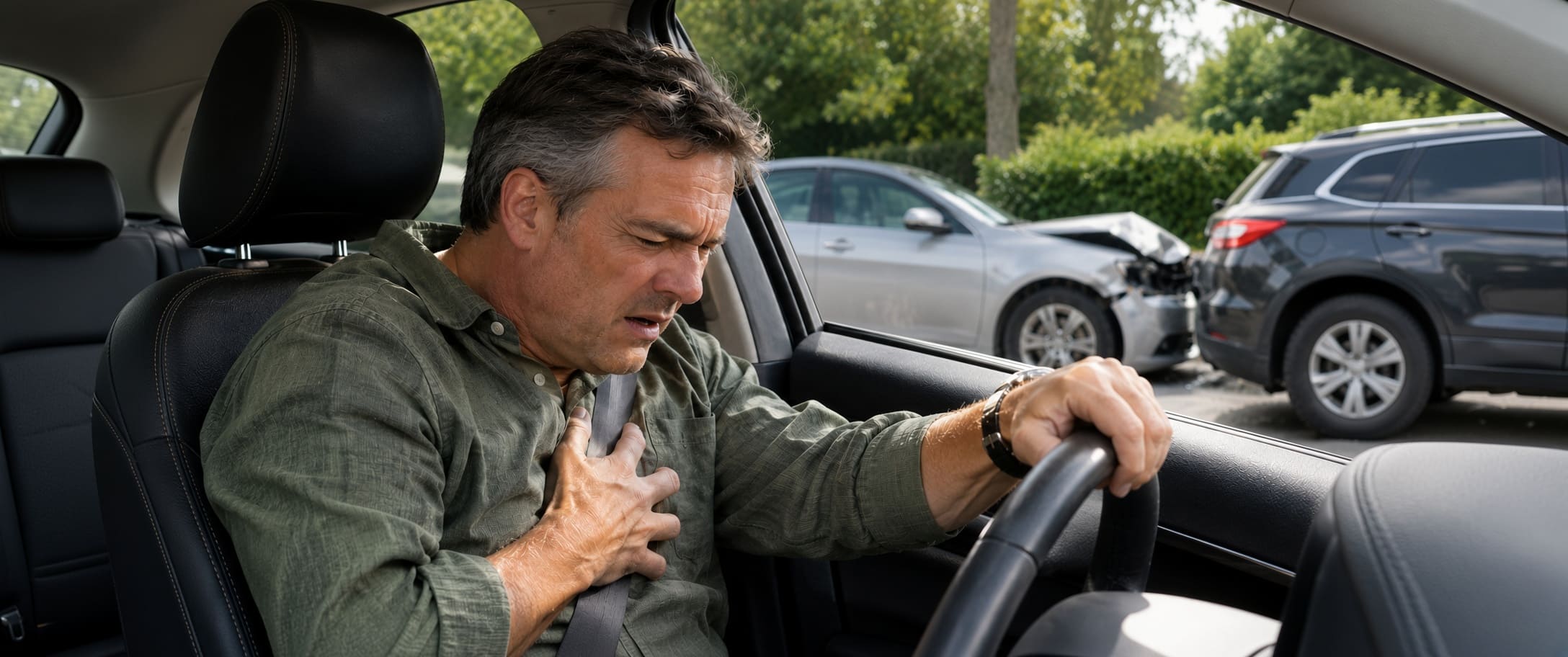
Relevant medical information must be obtained through lawful insurance or litigation procedures, with appropriate privacy protections. Preservation matters because recordings and vehicle data may be lost long before a liability dispute is resolved.
Florida Second District Court of Appeal · Automobile collision
A company-vehicle driver suffered a first, unanticipated seizure. The driver’s account and passenger testimony placed the loss of consciousness before impact; the passenger estimated no more than about fifteen seconds from the initial symptoms to the collision. A neurologist testified that the seizure could not reasonably have been anticipated. The appellate court held that the defense required a directed verdict and reversed the adverse judgment.
Florida Fifth District Court of Appeal · Airboat collision, not a car crash
The operator had a serious cardiac history, and evidence concerning his knowledge and declined diagnostic testing raised factual questions about foreseeability. The appellate court reversed summary judgment for his estate. It did not rule that having heart disease automatically establishes negligence.
The distinction: Marcum illustrates an established, unforeseeable emergency. Feagle illustrates why disputed warnings can require factual resolution. The boat case also involved a vessel-specific standard of care; that standard should not be treated as the rule for automobile drivers.

Potential recovery depends on which claim is being made and whether legal fault or another coverage trigger can be established. If the emergency defense fails, an injured person may pursue an otherwise supported negligence claim against the driver and potentially other legally responsible parties. Separate negligence or product-defect claims require independent proof; they do not arise merely because the driver became ill.
Eligible injured people may have access to Florida personal injury protection benefits regardless of fault, subject to applicable coverage requirements.
The other driver’s bodily injury liability policy does not guarantee payment when that driver has no legal liability for the crash.
Uninsured or underinsured motorist coverage generally turns on the insured being legally entitled to recover damages from the other motorist.
Florida’s PIP discussion about an injured person’s emergency medical condition is a separate issue from whether the other driver was negligent before this crash.
Ask which of the four defense elements the insurer says is proven and what evidence supports each one. A medical diagnosis, without a reliable pre-crash timeline, may leave essential questions unanswered.
No. The driver must prove sudden incapacity before the allegedly negligent conduct and show it was neither foreseen nor reasonably foreseeable. Prior symptoms and warnings can matter.
An epilepsy diagnosis alone does not resolve negligence. Recent seizures, driving restrictions, adherence to medical advice, and warning signs may determine whether another episode was foreseeable.
The defendant raising Florida’s sudden medical emergency defense bears the burden of establishing its elements. The injured person may challenge the medical and timing evidence.
They may. Records documenting relevant prior episodes, explicit warnings, or an ignored restriction can undermine an assertion that incapacitation was unforeseeable. They must be interpreted in context.
Possibly. Your applicable PIP benefits may be available without proving another driver’s fault. Liability and UM/UIM payments depend on the legal and policy requirements; neither is automatic.
General information about Florida law, not legal advice for a particular accident. Case outcomes and coverage depend on specific facts and policy terms.