
Gather the search details
Have the crash date, county, city, road or intersection, driver names, vehicle information, responding agency, and report number if you have it.
Florida Crash Report Guide
A police report identifies key crash facts but does not decide fault or claim value. Compare it with medical records, photos, witness statements, insurance documents, and repair evidence before accepting an insurer’s position.
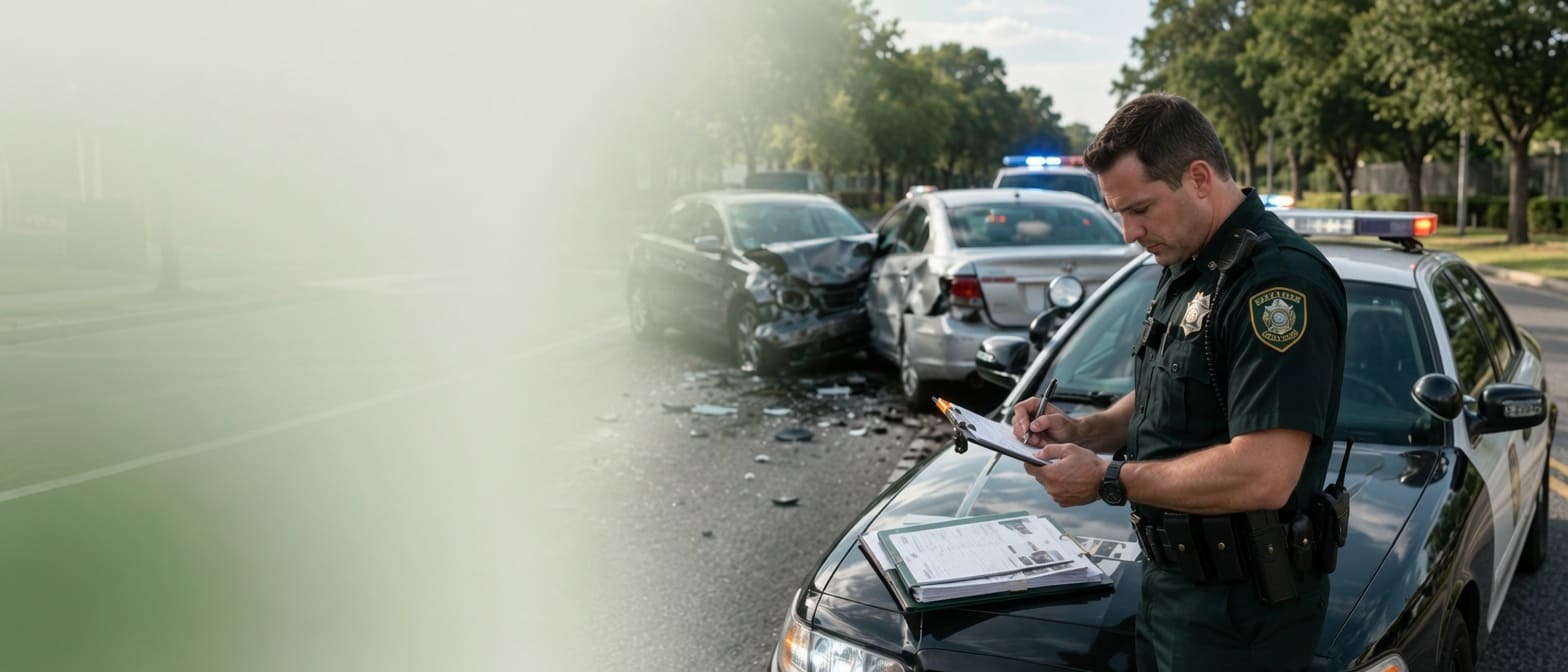
You can usually request a Florida crash report through the Florida Crash Portal or the law enforcement agency that investigated the crash. FLHSMV says reports may take up to 10 days to become available. The online portal charges $10 per report plus a $2 convenience fee per transaction. After purchase, download the report within 48 hours. For the first 60 days, reports with personal information are restricted to eligible people and entities.
FLHSMV is the official state repository for Florida crash reports. Many reports can be searched and purchased through the Florida Crash Portal. If the report is not available through the portal, contact the police department, sheriff's office, or Florida Highway Patrol office that investigated the crash.
Have the crash date, county, city, road or intersection, driver names, vehicle information, responding agency, and report number if you have it.
FLHSMV states that traffic crash reports may take up to 10 days to become available. A recent crash may not appear in the portal right away.
Eligible users can search for and purchase official crash reports through the portal. The online cost is $10 per report, plus a $2 convenience fee per transaction.
Reports purchased through the portal are available online after purchase, but they must be downloaded within 48 hours. Save the PDF, receipt, report number, agency name, and confirmation email.
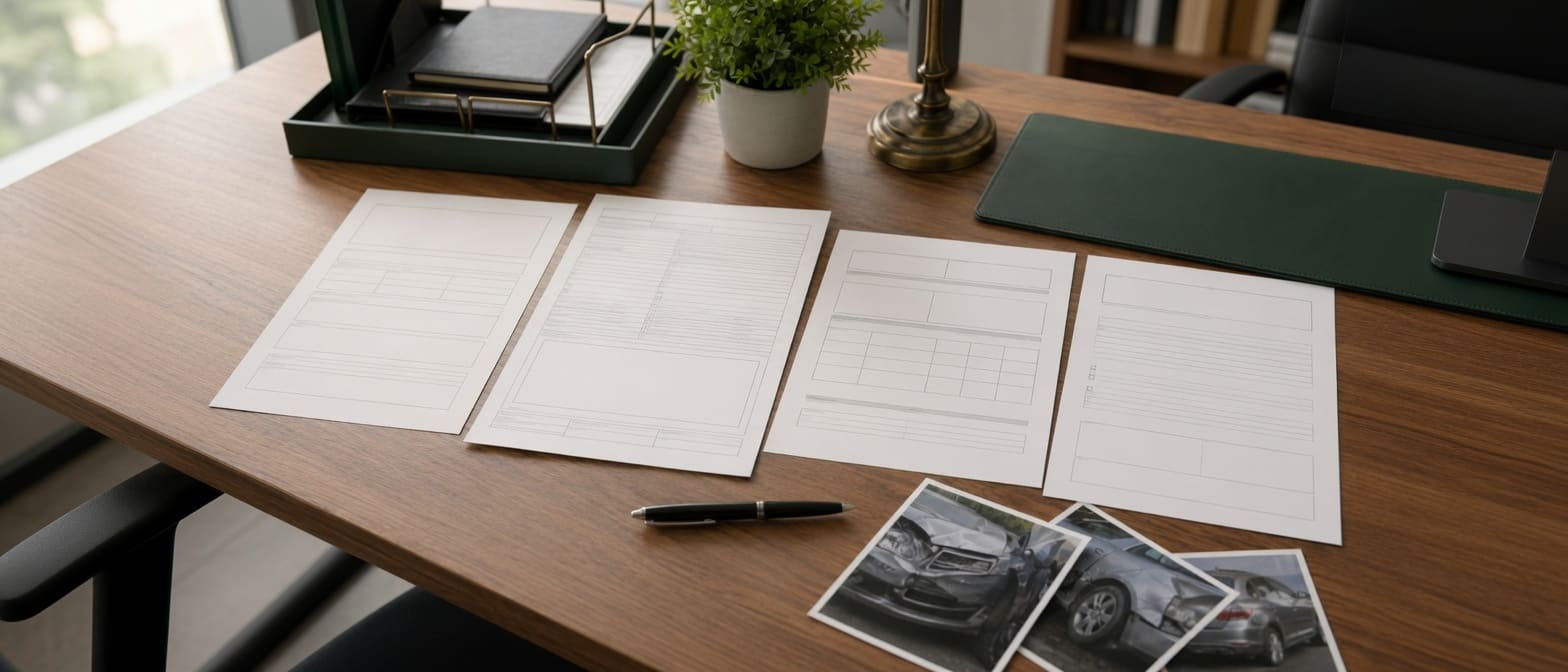
Save the complete PDF, not only a screenshot or partial printout. If the portal search does not find the report, call the investigating agency's records unit and ask how to request a copy directly.
A crash report confirms basic facts that insurers and attorneys look for early: when the collision happened, where it happened, who was involved, which agency responded, and what the officer recorded before vehicles were repaired or witnesses became harder to reach.
The report often lists drivers, passengers, vehicle owners, witnesses, insurance companies, the investigating officer, and the responding agency. These details help show who should receive notice and which insurer should respond.
Adjusters often look at the diagram, narrative, citation references, listed insurance company, injury notation, and vehicle information when deciding how to value or dispute the claim.
Common report issues include a wrong road name, missing witness, unclear diagram, incorrect insurance entry, incomplete injury note, or a narrative that does not match the vehicle damage pattern.
The agency name, officer name, report number, witness section, insurance entries, intersection details, and citation information can guide the next steps in the claim.
Use the report to build a document trail. Check the report number, agency, parties, insurance entries, location, injury notes, and witnesses before discussing fault or settlement value with an insurer.
Crash reports containing personal information are confidential and exempt from public disclosure for 60 days after the report is filed. During that restricted period, access is generally limited to people and entities allowed by Florida Statutes section 316.066.
If you were involved in the crash, you may qualify to request the report before it becomes broadly available. If someone unrelated to the crash tries to obtain it during the first 60 days, Florida law limits access to protect personal information.
Florida crash reporting rules do not treat every collision the same way. Separate these four issues: when law enforcement should be notified, when a Long Form is required, when a short-form or exchange-of-information form is used, and when a driver self-report applies.
FLHSMV guidance and Florida reporting rules identify situations where law enforcement should be contacted or a formal report may be required, including injury, death, hit-and-run, suspected impaired driving, apparent property damage of at least $500, a vehicle needing a wrecker, or commercial motor vehicle involvement.
A Long Form is required in specified crashes, including crashes involving death, personal injury, complaints of pain or discomfort, certain traffic violations, a vehicle requiring a wrecker, or a commercial motor vehicle. Injury claims often depend on this more detailed law enforcement report.
If a Long Form is not required for a public-roadway crash, the officer may complete a short-form report or provide a driver exchange-of-information form. These records still help identify the vehicles, parties, witnesses, officer, agency, and insurance companies.
When a crash results in vehicle or property damage but does not require a law enforcement report, Florida law provides for a written driver report within 10 days after the crash. A self-report can document a minor crash, but it is not the same as an officer's investigation of an injury collision.
The contents depend on the type of report and the investigation. A report commonly includes the crash date, time, location, vehicles, parties, witnesses, investigating officer, agency, insurance companies, road conditions, vehicle movement, citations, a diagram, a narrative, and notes about injury complaints.
Check identity, insurance, location, witnesses, injury notes, and the officer narrative first. These entries often influence early insurance decisions and create the most problems when they are wrong or incomplete.
Review the report with the claim in mind, not just as a form. Begin with the names, vehicles, insurance entries, and location. Then look at the diagram, witnesses, injury notes, and narrative. A small clerical error may only need a records correction, while a disputed lane position, missing witness, or incomplete injury note can affect how the insurer views fault, treatment, or settlement value.
| Report item | Why it matters | What to do if it looks wrong |
|---|---|---|
| Driver, vehicle, and insurance details | Wrong names, policy information, or vehicle details can delay the claim and create confusion about which insurer should respond. | Save the insurance card, registration, claim letters, and any insurer communication. Ask the investigating agency how it handles corrections or supplements. |
| Crash location and diagram | An inaccurate intersection, lane position, direction of travel, or impact point can affect the insurer's view of fault. | Preserve the records that show the actual layout, such as scene images, a map, vehicle damage records, or available dashcam footage. |
| Witnesses and passengers | A missing witness can make the claim look like one driver's word against another's, especially when fault is disputed. | Write down witness names, phone numbers, vehicle descriptions, and any messages received after the crash. Give the agency clear identifying details if you request a supplement. |
| Injury or pain notes | A report may say no injury was reported at the scene even when pain appeared later, became worse, or required treatment after adrenaline wore off. | Keep treatment records, appointment dates, diagnosis notes, and a symptom timeline. This can matter in Florida PIP issues and delayed-symptom disputes. |
| Narrative, citation, or contributing factors | The insurer may rely on the officer's narrative, citations, or listed contributing factors when arguing fault or reducing settlement value. | Compare the narrative with physical evidence, traffic-control details, repair documentation, and available recordings before responding to the insurer's liability position. |
The checklist helps you spot entries that need follow-up. It does not mean the officer will change every entry, and it does not decide legal fault. Some problems are corrected through agency procedures; others are addressed later with stronger records during the insurance claim.
Report mistakes should be handled early. A wrong insurance entry, missing witness, inaccurate location, incomplete injury note, or unclear narrative can affect how the insurer evaluates fault, coverage, and damages.
Start with names, driver license information, vehicle descriptions, insurance entries, date, time, location, agency name, and report number. These details are usually easier to verify with documents.
A typo or wrong insurance company is different from a disputed narrative about how the crash happened. The request should be clear, specific, and supported by records.
Keep the documents that show the issue: insurance card, registration, treatment record, repair estimate, witness contact, image, recording, or written insurer response.
Ask the records unit or investigating officer how the agency handles corrections, amendments, or supplements. Keep a copy of your request and any response you receive.
If the insurer uses a report entry to blame you, dispute treatment, reduce payment, or pressure you into an early settlement, answer with organized records rather than argument alone. The report should be compared with your medical, insurance, and accident records.
A crash report records information available near the time of the collision. It usually does not show later medical developments, the full financial impact of the injury, or records discovered after the scene cleared.
Neck pain, back pain, headaches, shoulder symptoms, or concussion-related issues can appear or worsen after the report is written. Treatment records and a symptom timeline help explain why the report did not list every injury at the scene.
A report does not always include recordings, images, repair documentation, or a detailed analysis of vehicle damage. Those records become important when the diagram is disputed or the other driver changes their account.
Florida motor vehicle claims may involve Personal Injury Protection benefits. Medical timing, treatment records, and symptom documentation can become important when an insurer evaluates benefits and injury causation.
A report usually does not show missed work, reduced earning ability, household limitations, therapy progress, future care needs, or how the injury affects normal activities over time.
Not by itself. A Florida crash report can influence an insurance review, but it does not automatically decide civil fault or damages. Legal responsibility depends on the facts that can be proven, the applicable traffic laws, witness testimony, physical evidence, medical documentation, and the rest of the claim record.
Florida Statutes section 316.066 also limits the use of crash reports and statements made for the report as evidence in a civil or criminal trial, depending on the statute and the evidence rules that apply. A report entry, citation reference, or one-sentence narrative should be reviewed carefully before accepting an insurer's position.
Do not treat that entry as the end of the claim analysis. Compare the report with the medical timeline, vehicle damage, roadway details, witness information, and any records that support what happened.
Insurers use a crash report to begin a liability review, identify coverage, compare different versions of the crash, locate witnesses, and decide what records to request next. A complete and accurate report helps organize a claim. An incomplete or inaccurate report should be answered with stronger documentation.
An adjuster often reviews the diagram, narrative, citations, point of impact, road location, vehicle positions, and officer notes when deciding whether to accept, dispute, or divide fault.
The report helps identify the other driver, vehicle owner, insurance company, passengers, witnesses, and responding agency. This is especially important in multi-vehicle crashes, commercial vehicle cases, and uninsured motorist issues.
If the report lists no injury at the scene, an insurer may compare that entry against later medical treatment. A clear treatment timeline helps explain symptoms that developed after the crash.
If the report favors the insurer's position, the adjuster may push for a quick settlement before treatment is complete. An early offer may not reflect ongoing care, lost income, future limitations, or disputed fault evidence.
The report can point to a witness, responding agency, report number, intersection, road condition, citation, or insurance company that needs follow-up.
If the other driver changes their account, compare the report with repair records, roadway details, traffic-control information, witness names, and the statements made shortly after the collision.
Send what is necessary, but avoid broad statements that go beyond the facts. Be especially careful with recorded statements, broad medical authorizations, and quick settlement releases.
A lawyer can review disputed entries, request supporting records, preserve time-sensitive evidence, evaluate PIP and liability issues, and respond when the insurer relies too heavily on an incomplete report.
If you are unsure how strong your claim may be, review the Florida Car Accident Claim Checker. For legal guidance after a crash, visit the Florida car accident lawyer page.
Legal review is especially useful when the report does not match what happened, the insurer is blaming you, symptoms appeared or worsened after the crash, or the case involves multiple vehicles, commercial coverage, uninsured motorist issues, hit-and-run facts, serious injuries, or a disputed version of events.

You can usually request a report through the Florida Crash Portal or the investigating law enforcement agency. Helpful search details include the crash date, county, location, driver information, vehicle information, responding agency, and report number if available.
Often, yes. A report number helps, but you may still be able to search or request the report using the crash date, county, location, driver names, vehicle information, and investigating agency.
FLHSMV lists the online crash report fee as $10 per report. The Florida Crash Portal also applies a $2 convenience fee for each transaction.
FLHSMV states that traffic crash reports may take up to 10 days to become available. If the crash was recent, the report may not appear in the portal immediately.
After a report is purchased through the portal, it should be downloaded within 48 hours. Save the PDF and receipt in more than one secure place.
No. Crash reports containing personal information are confidential and exempt from public disclosure for 60 days after filing. During that period, access is generally limited to people and entities allowed by Florida law.
A Long Form is required for specified crashes such as crashes involving injury, death, complaints of pain, certain violations, a wrecker, or a commercial motor vehicle. If a Long Form is not required, an officer may complete a short-form report or provide an exchange-of-information form.
A driver self-report may apply when a crash results in vehicle or property damage but does not require a law enforcement report. Florida law provides for a written report within 10 days in that situation.
Not by itself. The report may influence an insurance review, but legal fault depends on the full record, including traffic laws, physical evidence, medical documentation, witness testimony, and further investigation.
Save the evidence that shows the issue and contact the investigating agency to ask about its correction or supplement process. Important proof may include insurance records, treatment records, repair documents, scene images, and written communications.
An insurer may rely on report entries when disputing fault, injuries, coverage, or settlement value. A report problem should be answered with organized evidence and, when the dispute is serious, legal review.
A report may not include symptoms that developed later. Keep treatment records, appointment dates, diagnosis notes, treatment instructions, and a timeline of when pain or limitations began.
The insurer may request the report or obtain it if eligible. Before giving a recorded statement, signing a release, or sending broad medical authorizations, consider legal review if you were injured or fault is disputed.
Free Consultation
If an insurance company is pressuring you or you are unsure what to do after an accident, contact our team for a free case assessment. We review your situation and explain your options at no cost.
No fee unless we win. Available 24/7 for new clients in Orlando, Fort Myers, and across Florida.
(407) 203-2769